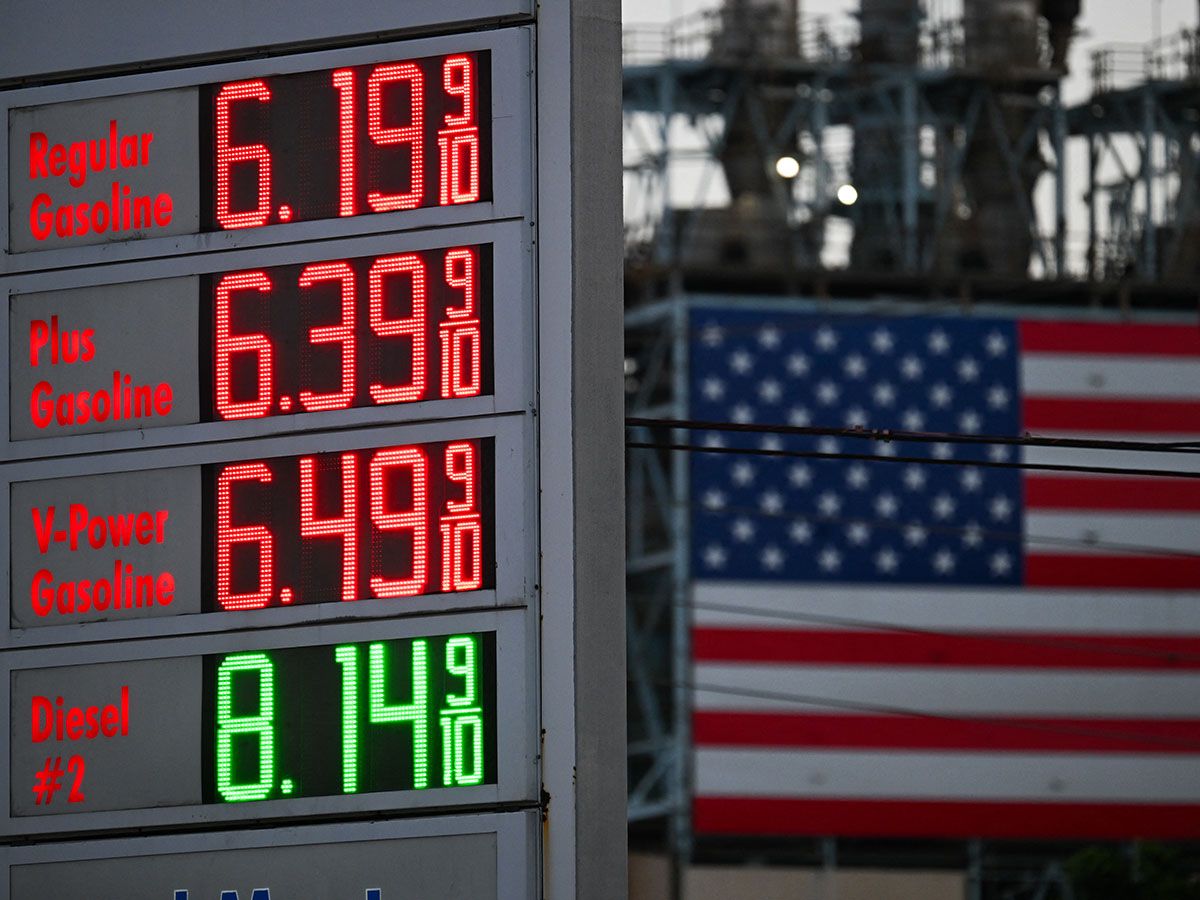


U.S. President Donald Trump announced over the weekend that he is still looking “very seriously” at implementing a U.S. ban on diesel exports to combat high prices, a move analysts have warned would just fan the flames of the global energy shortage.
Republicans are under pressure to ease high diesel prices for farmers ahead of the midterm elections after a run-up that has pushed the fuel to historic highs.
Most analysts agree a ban on exports would be at best self-defeating.
Resource researcher Wood Mackenzie warns that not only would a U.S. ban draw down diesel stocks worldwide, it would also force U.S. refineries to cut production and raise gas prices.
Its analysis estimates that a ban on exports would fill storage in the United States within weeks and force producers to cut the volume of oil going to refineries.
“The irony of a U.S. diesel export ban is that it would likely increase costs for American consumers,” said Alan Gelder, a commodities researcher at Wood Mackenzie.
“Cutting crude runs to manage the oversupply would shift the cost burden from diesel to gasoline, meaning a policy designed to bring relief at the diesel pump could end up driving prices higher at the gasoline pump.”
U.S. diesel exports to other countries, especially Europe, have risen in the past six months as the Iran war cut off Middle East supplies and Russia initiated its own export ban to cope with domestic shortages.
A U.S. ban would accelerate stock drawdowns across global markets at a time when Europe’s share of U.S. diesel exports is almost 50 per cent, up from 30 per cent last year.
“A ban on U.S. diesel exports would increase competition for non-U.S. barrels in an already tightly supplied market,” said Gelder.
“China is currently the only country with material spare refining capacity that could cover the loss of U.S. refinery throughputs. However, China may well decide it is not in its interest to do this.”
David Oxley, chief climate and commodities economist at Capital Economics, said the scale of the economic shock that could stem from a complete ban on U.S. diesel exports would be comparable to the natural gas crisis in Europe in 2022.
Natural gas prices in the eurozone then averaged about US$240 a barrel, peaking at more than US$400 per barrel in August of 2022.
Capital Economics believes that some form of export restriction is likely to be announced in coming weeks, as politicians will want to be seen doing something on fuel prices before the midterms.
“This would further complicate the outlooks for energy markets and fuel price inflation,” said Oxley.
On the bright side, since a ban won’t solve anything and could make things worse, “we suspect that it would be short-lived.”
Sign up here to get Posthaste delivered straight to your inbox.


Wondering what’s driving bond yields to disturbing heights lately?
BMO chief economist Douglas Porter said growing concern about government debt is one factor and the higher yields go, the bigger interest payments on that debt get.
Canada’s interest payment to revenue ratio peaked above 35 per cent in the 1990s, triggering austerity measures. By the early 2020s it was down to 6 per cent, but since the pandemic it has risen to almost 11 per cent.
That is still better than south of the border. In the United States federal debt interest has climbed to the post-war high of almost 20 per cent of revenues.
“Given still-rising debt loads and that maturing debt is rolling off into higher rates, this ratio is poised to push even higher in coming years — possibly above 25 per cent in 10 years,” said Porter in a note.

- Alberta Premier Danielle Smith and Ontario Premier Doug Ford meet at an event in Calgary to talk about Canada’s economic future.



- ‘The yardsticks have moved’ in Canada’s trade relationship with U.S., says Tiff Macklem
- AI can be a helpful employee management tool — and a legal liability in decision making
- Should Glen, 45, with little savings and $100,000 remaining on his mortgage, borrow to invest in an RRSP?

Just like “The Great One,” Wayne Gretzky, superior investment results stem from “skating where the puck’s going, not where it’s been.” Noah Solomon, chief investment officer at Outcome Metric Asset Management LP, says a change is coming in markets and explains how to position your portfolio for below-average returns. Find out more
 Interested in energy? The subscriber-only FP West: Energy Insider newsletter brings you exclusive reporting and in-depth analysis on one of the country’s most important sectors. Sign up here.
McLister on mortgages
Want to learn more about mortgages? Mortgage strategist Robert McLister’s Financial Post column can help navigate the complex sector, from the latest trends to financing opportunities you won’t want to miss. Plus check his mortgage rate page for Canada’s lowest national mortgage rates, updated daily.
Financial Post on YouTube
Visit the Financial Post’s YouTube channel for interviews with Canada’s leading experts in business, economics, housing, the energy sector and more.
Today’s Posthaste was written by Pamela Heaven with additional reporting from Financial Post staff and Bloomberg.
Have a story idea, pitch, embargoed report, or a suggestion for this newsletter? Email us at posthaste@postmedia.com .
Bookmark our website and support our journalism: Don’t miss the business news you need to know — add financialpost.com to your bookmarks and sign up for our newsletters here
Posthaste: How Trump's threatened diesel ban could fan the flames of the world's fuel shock
2026-09-28 12:03:32