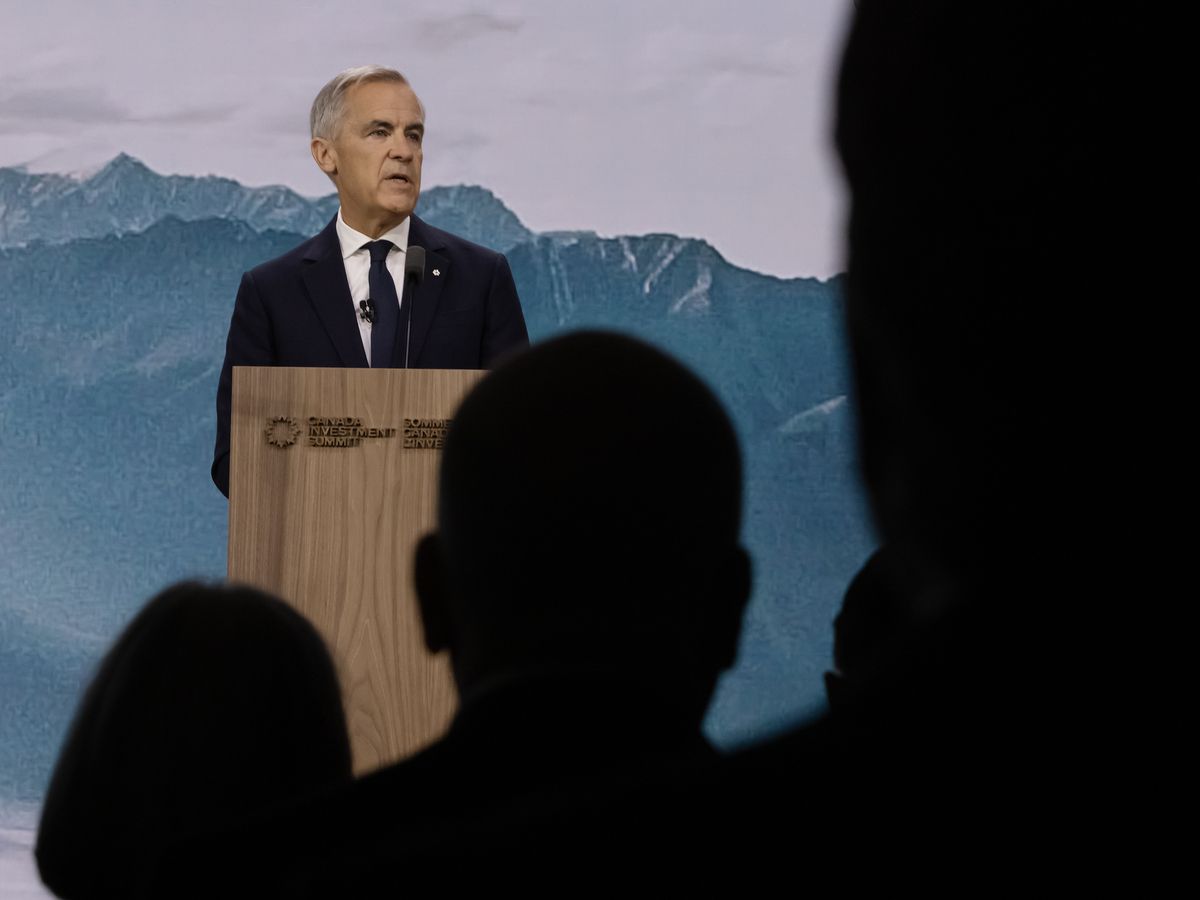


Bank of Canada governor Tiff Macklem says domestic data will drive rate decisions, but you might want to track what the betting markets believe since they continue to correctly predict the policy moves of central banks around the world, National Bank of Canada says.
“For (central) banks yet to deliver a hike, the messaging is clear — inflation risks are paramount — and markets have appropriately priced in eventual action,” Ethan Currie, a strategist at National Bank, said in a note on Wednesday.
Investors place bets on interest rate moves via the overnight index swaps (OIS) markets, which are used to help manage short-term interest rate risks.
There is about a 60 per cent chance of the Bank of Canada hiking interest rates at its next meeting on Oct. 28, according to action on OIS markets on Wednesday, up from about 30 per cent at the start of September, but down from a monthly high around 75 per cent. Bets for a rate hike in December were fully priced in.
But Macklem has pushed back against the idea of external forces playing a role in monetary policy decisions.
“We can run a monetary policy in Canada that is geared to the situation in Canada, and that’s what we’re going to keep doing,” he said at a news conference in Halifax on Monday.
Evidence is building up, however, that interest rate markets are ahead of the curve when it comes to rate decisions.
Five major central banks have hiked rates this year, including the United States Federal Reserve , European Central Bank, Bank of Japan and Reserve Bank of Australia.
The Fed hiked rates last week to 3.75 per cent to four per cent and 65 per cent of market bets say it will hike again at the end of October. The European Central Bank increased rates in June and September, while the Bank of Japan increased rates last Friday to 1.25 per cent from one per cent.
The Reserve Bank of Australia hiked rates three times earlier this year and it is expected to hike again when is meets on Sept. 29.
In all cases, OIS markets bet on rate increases due to inflation from elevated crude prices, something Currie doesn’t see improving.
“Notwithstanding a moderation from peak spot oil prices, the pressure for policymakers to respond is only growing,” he said.
For example, long-term oil futures indicate crude prices will “continue to grind higher,” he said, and rising crack spreads — the difference between the price of oil and the products made from it, such as gasoline, diesel and jet fuel — due to the shortage of those refined products are “showing up as record prices at the pump.”
Currie said he doesn’t see that getting any better, given that supplies of gasoline and diesel from the Middle East and Russia remain cut off from global markets while other refining centres, such as the U.S., are running at full capacity.
The upcoming refinery maintenance season could further throttle refined supplies.
“There’s no easy solution to rectify shortfalls either; even if supply were restored, it could take years for inventories to fully normalize, a development that could mean higher prices for longer,” he said.
Headline inflation in Canada hit three per cent in August, mostly due to higher gas prices, but core inflation is still near the Bank of Canada’s target of two per cent.
Macklem said ongoing economic slack and tariff uncertainty are making Canada’s interest rate trajectory less clear than in the U.S., though the Bank of Canada is committed to containing inflation.
“Policymakers have been consistent: a lingering supply shock threatens second-round effects on inflation,” Currie said. “As such, central bank pricing has been closely tied to crude.”
He estimates approximately 300 basis points of tightening coming from the Fed, Bank of Canada, ECB and Bank of England over the next nine months, though National Bank is calling for the Fed and the Bank of Canada to hike a little less than markets are predicting.
National Bank of Canada has pulled its call for the Bank of Canada to hike interest rates forward to December from January.
Sign up here to get Posthaste delivered straight to your inbox.

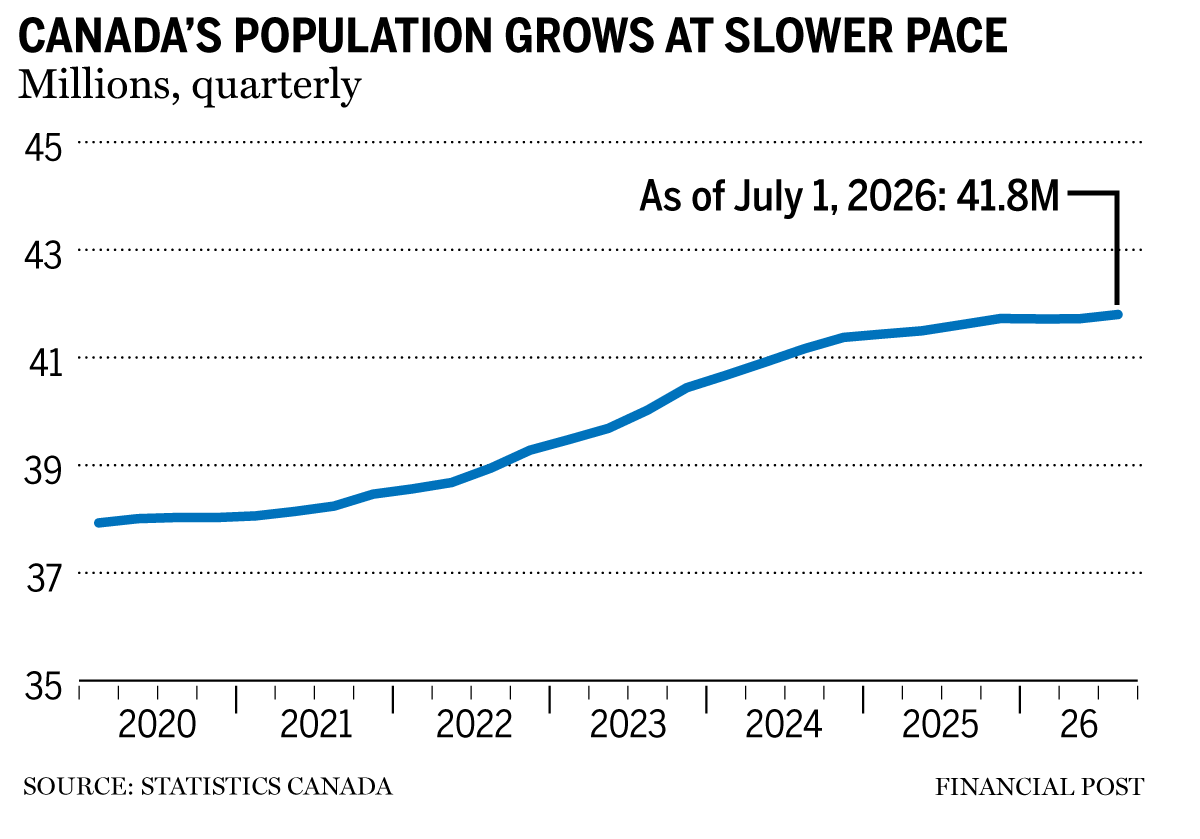
Canada’s annual population growth has slowed to its lowest level in more than 80 years due to lower immigration, says Statistics Canada.
The population is estimated to have added 189,425 people from July 2025 to July 2026, which is the lowest annual growth since 1944-1945, when the population increased by 126,000 people, the agency said on Wednesday. The population’s growth of 0.5 per cent in the past year is the lowest since the 0.3 per cent increase in 1915-1916. — Naimul Karim, Financial Post
Read the full story here.

- Today’s Data: Canadian Federation of Independent Business business barometer, payroll employment change, retail sales, U.S. current account balance, new and continuing jobless claims, new home sales
- Earnings: BlackBerry Ltd., New Gold Inc., Canadian North Resources Inc., Harvest Gold Corp., Irving Resources Inc.



- Canadian dollar falls below 71 cents U.S. as headwinds loom for loonie
- A Canadian who lived abroad thought she followed TFSA contribution rules, but CRA surprised her with a penalty tax
- Should an employee be fired for cause for lying on their resumé?

This couple want to buy their first home, but between a few credit cards, a car loan, a sizable overdraft and three payday loans, they are carrying about $38,000 in debt. They wonder if consolidating everything into one loan would make more sense than saving for a down payment right now. Read FP Answers to find out more.

The FP Atlantic Economic Report takes you behind the scenes of the business world in Atlantic Canada. We’ll bring you insights from CEOs, government leaders, investors and economists on what’s making the regional economy tick and where it’s heading next. Sign up here
McLister on mortgages
Want to learn more about mortgages? Mortgage strategist Robert McLister’s Financial Post column can help navigate the complex sector, from the latest trends to financing opportunities you won’t want to miss. Plus check his mortgage rate page for Canada’s lowest national mortgage rates, updated daily.
Financial Post on YouTube
Visit the Financial Post’s YouTube channel for interviews with Canada’s leading experts in business, economics, housing, the energy sector and more.
Today’s Posthaste was written by Gigi Suhanic with additional reporting from Financial Post staff and Bloomberg.
Have a story idea, pitch, embargoed report, or a suggestion for this newsletter? Email us at posthaste@postmedia.com .
Bookmark our website and support our journalism: Don’t miss the business news you need to know — add financialpost.com to your bookmarks and sign up for our newsletters here
Posthaste: Tiff Macklem take note — markets have so far correctly called interest rate hikes, says analyst
2026-09-24 12:00:20