

Foreigners can’t seem to get enough of Canadian debt.
According to the latest international securities transactions data out yesterday, foreign investors’ “voracious appetite” for Canadian bonds continued in June.
National Bank of Canada strategists Taylor Schleich and Warren Lovely said while Ottawa is focusing on building up the domestic economy to make Canada less reliant on the rest of the world, a different dynamic is going on in the bond market.
“Canadian bond issuers are ‘outsourcing’ like never before,” they said.
The $35 billion in net buying by non-residents in June was nearly triple the prior record of $13 billion in June 2024 and brings the year-to-date total to $185 billion, more than 50 per cent higher than the next biggest year in 2020.
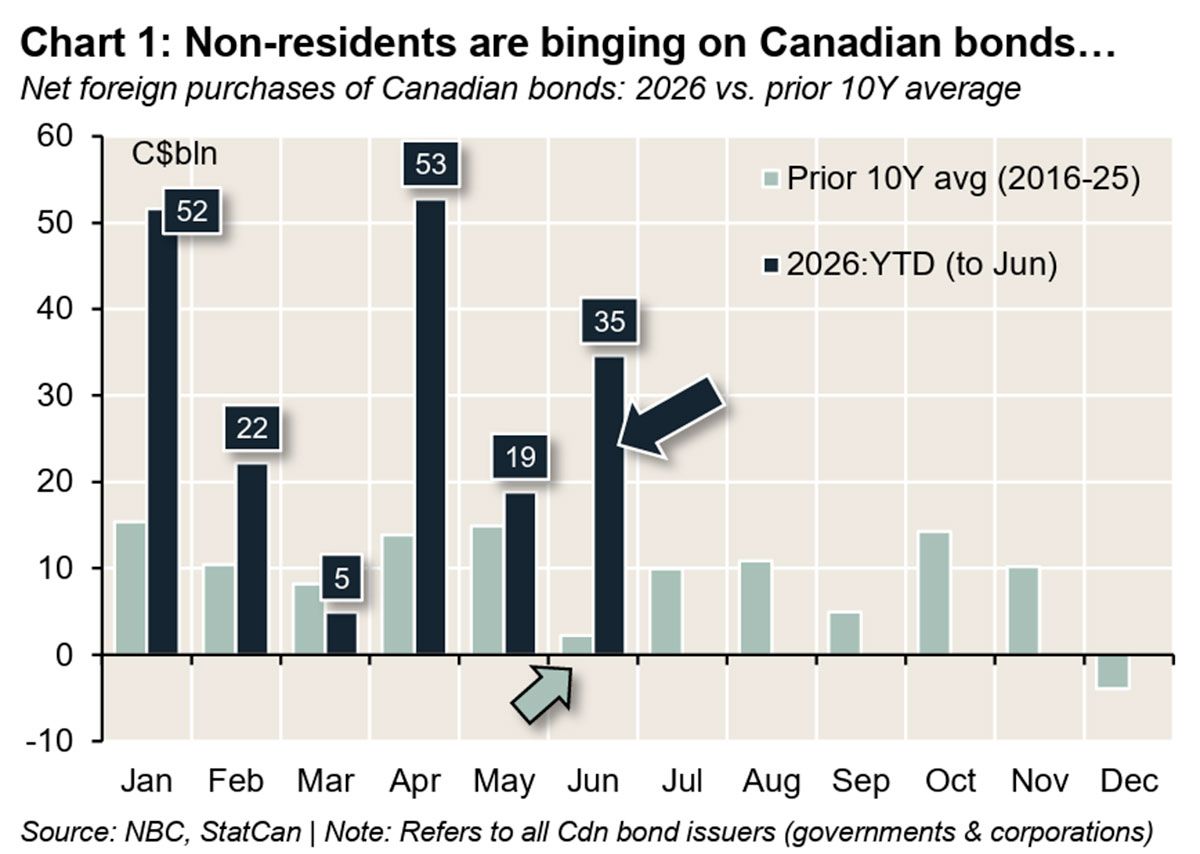
Foreign investors are buying both government and corporate bonds, but mostly Government of Canada. So much so that non-residents have not only absorbed all of Ottawa’s net issuance, but also the run-off from the Bank of Canada’s balance sheet, said the strategists.
Non-residents now own 45 per cent of the domestic GoC market, more than residents who own 42.9 per cent.
This isn’t the first time that has happened. Foreign investors owning a bigger share occurred briefly in 2021, 2022 and 2025, but the 2.1 percentage point gap is a new record, said Schleich and Lovely.
Before the pandemic foreigners owned around 33 per cent.
Buyers come from the United Kingdom, the eurozone, Japan and other corners of the earth, but mostly from the United States, which held 43 per cent of non-resident holdings in June.
“Thankfully, our bonds can cross the border tariff-free,” quipped the strategists.
What foreign investors aren’t buying in Canada are money markets and equities. Non-residents have been net sellers of these in 2026.
Foreigners now own more than $2.5 trillion of Canadian bonds, while a decade ago, they owned less than half of that, said the strategists.
While demand is good, the strategists say that a foreigner-heavy investor base also has risks.
Canadian bonds are attractive to outsiders now because of the country’s political stability, more sustainable fiscal policy and as an alternative to United States Treasuries, which face increasing pressure in bond markets.
“Maintaining that will be key to keeping borrowing costs relatively low,” said Schleich and Lovely.
Sign up here to get Posthaste delivered straight to your inbox.

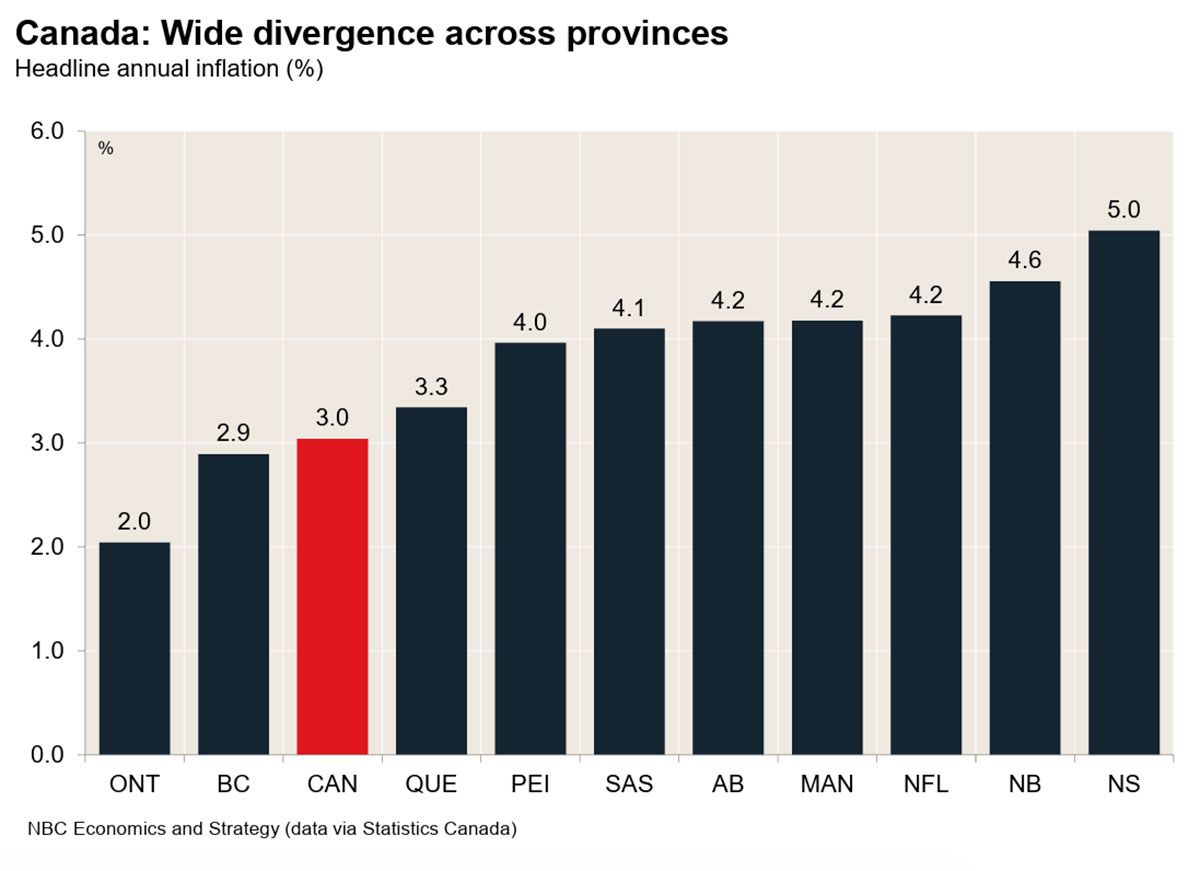
Canada’s inflation rate ticked up to 3 per cent in July, Statistics Canada showed yesterday, but that rate varied widely across the country.
Prices rose at a faster pace from the month before in all provinces except Ontario. At 2 per cent this province’s inflation rate was the lowest in the country, thanks to declines in homeowners’ replacement costs and natural gas prices. Nova Scotia, on the other hand, had the highest rate of inflation at 5 per cent, driven by higher prices for electricity and rent.

- Today’s data: Canada existing home sales, housing, United States housing starts and building permits, capacity utilization
- Earnings: Home Depot Inc..


- How their mother’s death spurred two brothers to speed up the drug discovery process through AI
- Canada’s inflation rate creeps up to 3% after gas prices spike
- ‘This one is personal’: RBC becomes sponsor of Ryan Reynolds’ Wrexham AFC soccer team

Miles, 65, is looking to retire in the next three years but worries that his investments and Canada Pension Plan and Old Age Security won’t be enough. A low-risk investor, he has accumulated over $1.1 million in various investment vehicles but all of it is in Guaranteed Investment Certificates (GICs), generating returns of about three per cent. Is his approach too conservative? Find out what the experts have to say.
 Interested in energy? The subscriber-only FP West: Energy Insider newsletter brings you exclusive reporting and in-depth analysis on one of the country’s most important sectors. Sign up here.
McLister on mortgages
Want to learn more about mortgages? Mortgage strategist Robert McLister’s Financial Post column can help navigate the complex sector, from the latest trends to financing opportunities you won’t want to miss. Plus check his mortgage rate page for Canada’s lowest national mortgage rates, updated daily.
Financial Post on YouTube
Visit the Financial Post’s YouTube channel for interviews with Canada’s leading experts in business, economics, housing, the energy sector and more.
Today’s Posthaste was written by Pamela Heaven with additional reporting from Financial Post staff and Bloomberg.
Have a story idea, pitch, embargoed report, or a suggestion for this newsletter? Email us at posthaste@postmedia.com .
Bookmark our website and support our journalism: Don’t miss the business news you need to know — add financialpost.com to your bookmarks and sign up for our newsletters here
Posthaste: Foreign investors are snapping up Canadian debt in a record bond binge, but there are risks
2026-08-18 11:58:23