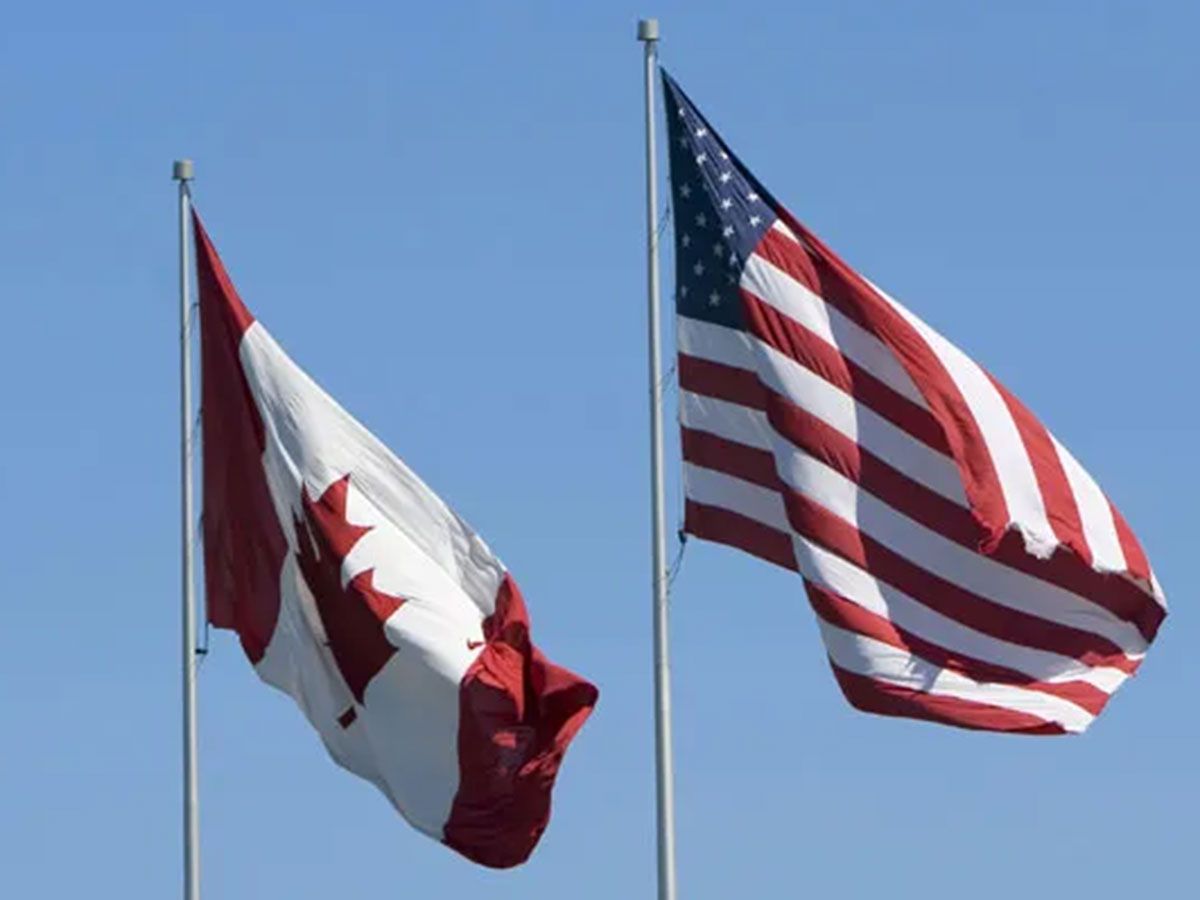

Canada formally called for the renewal of its trilateral trade deal with the United States and Mexico on Tuesday, but economists expect the uncertainty surrounding the pact will continue to weigh on the economy.
In a letter to his U.S. and Mexican counterparts, Intergovernmental Affairs Minister Dominic LeBlanc wrote that Canada “recommends renewal” of the Canada-U.S.-Mexico Agreement (CUSMA) for the next 16 years. The letter was sent a month ahead of the July 1 deadline when countries must decide if they want to renew or renegotiate the deal.
However, Canadian and U.S. officials have said negotiations are likely going to extend past the deadline, and the U.S. is pushing for a series of annual reviews over a 10-year period instead of a 16-year extension. Both options are allowed under current CUSMA regulations.
“This agreement is highly beneficial to each of our countries and to the integrated North American economy,” LeBlanc’s letter read.
It comes as Canada is already grappling with economic sluggishness that dates back to the start of the U.S.-Canada trade war in early 2025.
“It’s pretty clear that the trade war is front and centre of Canada’s economic slump. We need steady progress towards re-signing CUSMA,” said Bank of Montreal senior economist Sal Guatieri.
“In the worst case scenario, if the U.S. leaves CUSMA, then we’d be hit with pretty broad hefty tariffs . Canada is going to aim for that not to happen, but it’s going to take a while. We don’t think they’ll come to an agreement this year.”
Randall Bartlett, deputy chief economist at Desjardins Group, said Canada may want a quick resolution, but “the ball is largely in the U.S.’ court,” especially with the potential for a multi-year review process.
“That entrenches the uncertainty, instead of what should have been an impetus to get to an agreement,” Bartlett said.
He added that the Canadian government needs to focus on keeping the trade deal’s compliance exemption clause, especially since 80 to 90 per cent of Canadian exports to the U.S. are CUSMA compliant.
“If CUSMA compliance exemption is withdrawn, that would be a big problem for Canadian exporters and our economy will be severely negatively impacted,” he noted.
Guatieri said if CUSMA is renewed for another 16 years, it would improve business confidence in Canada. This could then lead to increased business investment and labour productivity, especially if the money is invested in technology that will make work more efficient.
Keeping the compliance exemption clause would also give the majority of Canadian goods duty-free status when exported to the U.S., he added. This would bring relief to impacted industries, along with lowered tariffs on goods like aluminum, lumber, steel, copper products and motor vehicles.
“Businesses just want to see steady progress towards renewing the agreement again. As long as there’s progress, it would clear up some of the uncertainty that’s been hanging over the heads of Canadian businesses,” Guatieri said.
“Business investment in Canada and the economy will pick up on a more sustained basis (if CUSMA is renewed), getting back to fairly healthy economic growth of around two per cent in 2027.”
Bartlett, however, has a different view of what that growth will look like.
“Business investment is going to be focused more around trade-supporting infrastructure in markets outside of the U.S., as opposed to traditional manufacturing…. We need to see private sector investment in Canada and federal government measures that attract that investment to make sure the Canadian economy continues to grow,” he noted.
• Email: ptran@postmedia.com
Canada calls for CUSMA renewal, but economists see no quick end to uncertainty
2026-06-03 14:19:03