
While oil supply shocks caused by the war in Iran have played havoc with gasoline and diesel prices, the cost of jet fuel has soared even higher. And as if Canadians’ budgets weren’t already strained enough from paying more at the pumps and store checkouts, for many, travel is about to become prohibitively expensive. Here, the Financial Post looks at what makes aviation fuel pricier to produce, why Canada is somewhat insulated from the supply shortage and how airlines are responding.
Why is jet fuel more expensive?
Limited refining capacity, strict quality control standards and specialized storage, transportation and distribution logistics all factor into the price of jet fuel.
It is a “high cost, high value product” that only about 10 per cent of the world’s refineries produce, said John Gradek, a faculty lecturer on supply networks and aviation management at McGill University in Montreal.
Compared to gasoline or diesel, you need a lot more crude oil to make jet fuel. Gradek said a typical barrel of oil can produce 44 barrels of gasoline, 17 barrels of diesel and 11 barrels of jet fuel.
“The price of that aviation fuel coming out of the refinery is a reflection of the amount of crude oil that you consume in order to get that barrel of jet fuel,” he said. “And you’re consuming a lot more crude oil to get that one barrel.”
Where is jet fuel refined?
There are a limited number of jet fuel refineries scattered around the world but Canada has “lucked out” in that area, Gradek said.
There are seven refineries located between Quebec and British Columbia that can supply 85 per cent of aviation fuel needs for departing aircraft. The other 15 per cent of Canada’s jet fuel is imported from the United States, Rotterdam or Trinidad and Tobago.
While Canada is relatively “self-sufficient” and shouldn’t have problems servicing domestic flights, Gradek said airlines face issues when they fly internationally and need to refuel.
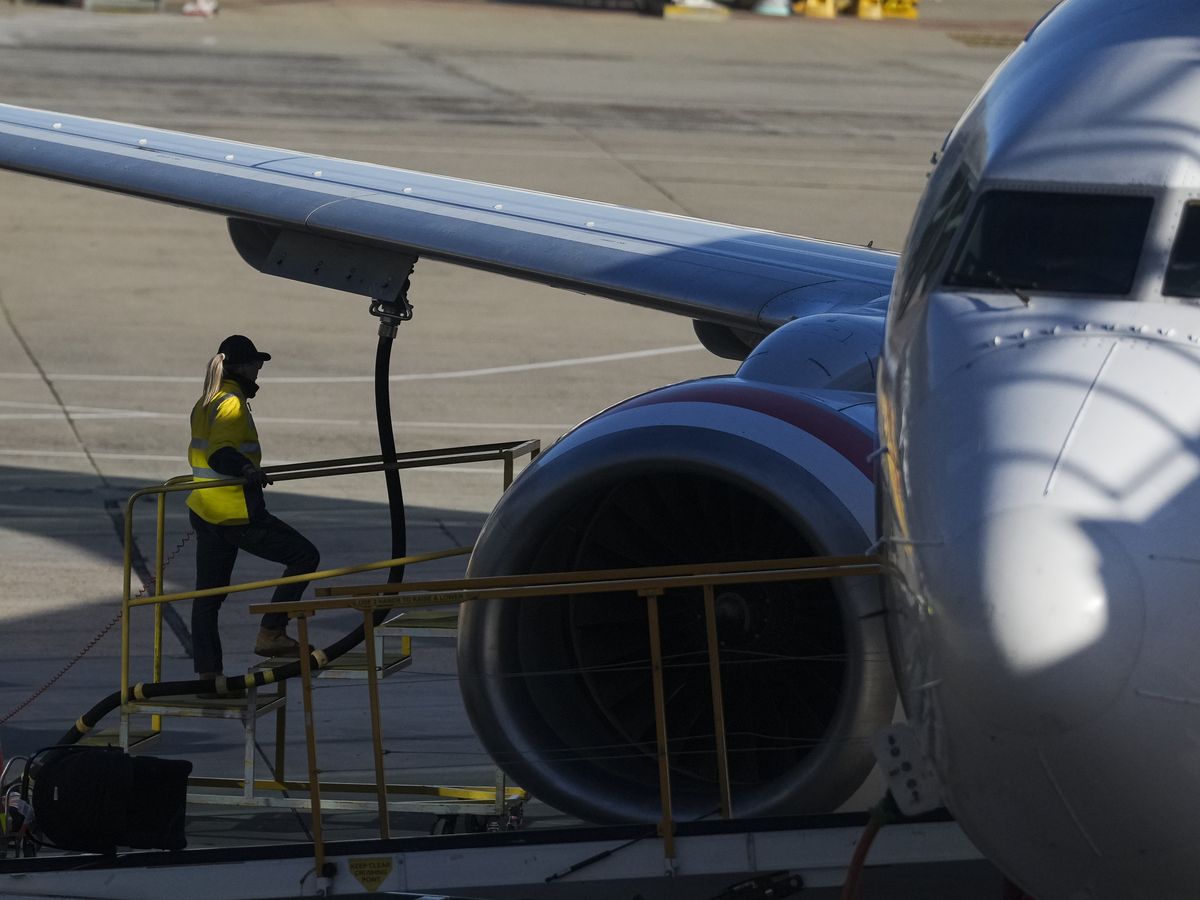
“If you’re flying from Toronto to São Paulo, or Calgary to Amsterdam, or Calgary to Tokyo, you haven’t got enough gas to come back on that plane, so you have to buy gas locally,” Gradek said. “And that’s where aviation fuel is short, and prices are high.”
How is the Iran war affecting jet fuel?
The conflict has severely disrupted — if not completely halted — the flow of tanker traffic through the Strait of Hormuz, a key shipping route for crude and other oil and gas supplies, including jet fuel, from Persian Gulf countries.
As a result, the cost of jet fuel has taken off. Global prices have climbed more than 70 per cent since military strikes against Iran began on Feb. 28, according to the
Platts Global Jet Fuel Index
, published by S&P Global Energy and the International Air Transport Association.
The supply shock is hitting especially hard in Asia, where jet fuel refineries rely on crude oil from the Middle East, and in Europe, which is heavily dependent on both imported crude and jet fuel.
In an
interview with the Associated Press
last Thursday, International Energy Agency executive director Fatih Birol said Europe has “maybe six weeks or so” of jet fuel left and warned that flights could be cancelled if oil shipments don’t start moving again.
How are airlines responding?
No airline in the world can escape the higher cost of jet fuel. Along with labour, fuel is one of the industry’s biggest operating expenses. It typically accounts for about 20 per cent of costs, according to a press release from WestJet Airlines Ltd.
The “significant bump” in fuel costs over the last eight weeks is squeezing airlines’ bottom lines, Gradek said.
“If you don’t do anything in terms of reducing other costs, or increasing your revenues, you’re going to take a significant, a billion-dollar, hit on your revenues,” he said.
In response to rising costs, major Canadian airlines including WestJet, Air Canada, Air Transat and Porter Airlines have added temporary fuel surcharges to bookings and are adjusting or cutting service to some destinations.
“Jet fuel prices have doubled since the start of the Iran conflict, affecting some lower profitability routes and flights which now are no longer economically feasible,” Air Canada said on its website.
How long will it take for fuel prices to come down?
It certainly didn’t take long for higher fuel costs to impact airfares in Canada. Ticket prices went up 2.9 per cent year over year in March, the first increase since June 2024, according to Statistics Canada.
While airlines’ fuel surcharges will probably disappear, Gradek said he thinks the chances of aviation fuel prices coming back down are “slim to none.”
He said jet fuel is less speculative and more “rational” in terms of availability and supply. If there’s a worldwide shortage, prices will stay high because nobody knows when the next shipment is going to arrive.
“As much as we’ve seen WTI and Brent (crude prices) yo-yo over the last two or three ceasefires, aviation fuel has not,” he said.
Gradek said airlines will be looking to diversify their sources of supply and will need to convince refineries that they can make money producing jet fuel.
“They’re going to basically keep the price of aviation fuel up there in order for refineries to feel comfortable that they can invest in and get a decent return from it,” he said.
• Email: jswitzer@postmedia.com
Everything you need to know about the soaring price of jet fuel
2026-04-23 19:25:16