


The country needs homes and it needs jobs, but efforts to achieve these crucial goals are getting tripped up by messy disputes that are sparking lawsuits and costing businesses already hit by Trump’s tariffs millions
Article content
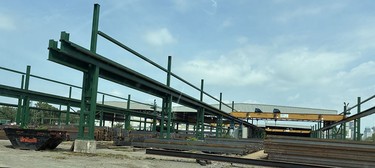
Steven Cohen steers his vehicle to the back of a 20-acre industrial lot on the outskirts of Niagara Falls, Ont., moving around stacks and stacks of metal beams and piles of coiled and long rebar. These are the steel building blocks of Canada’s next condo towers, bridges and other major infrastructure projects, but that’s not why they can’t stay here.
“Can you see that house?” he asks while pointing to a dark line in the distance after driving up to a rocky berm at his property’s edge. “What I can tell you is that’s supposed to be 500 metres away, but it’s only something like 80.”
Article content
Article content
Advertisement 2
Article content
About two decades ago, developers built a golf course on a neighbouring wooded lot that had been owned by a rail company. A few years later came Thundering Waters Village, a community of about 250 or so homes, including a condominium tower, townhouses and mixed single-family houses.

Top Stories
Article content
Cohen never paid much attention to any of the changes. His facility next door represents just one of the roughly two dozen plants his family’s company, Salit Steel Ltd., operates across Canada and the United States.
But as people moved into the homes, they complained about the clang of heavy metal, from the screechy bending of beams and the shearing of bars to the idling of truck engines and other sounds. After provincial regulators showed up around 2016, the residents’ problem became his problem.
Article content
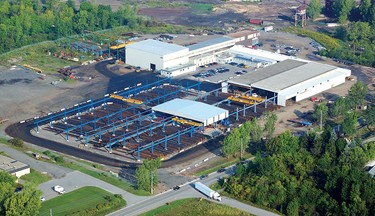
Salit Steel had been operating on the site for six decades, but suddenly it had to conform with residential noise limits — even though its property was zoned for industrial uses. Eventually, Cohen said he faced a whole new set of rules, including limits on dumping metal and loading trucks.
“The law in Ontario does not make sense,” he said. “Logic would tell you that that’s ass-backwards. Caveat emptor: you knew what you were buying and we were here first.”
Article content
Similar versions of this conflict are playing out across Canada as residential development increasingly butts up against industrial areas in what many have described as an effect of NIMBYism, the acronym coined to describe people who take a “not in my backyard” stance on just about anything.
Most NIMBY stories tie back to the country’s housing affordability crisis and focus on all the homes that were never built because they would have ruined someone’s view or destroyed the neighbourhood’s character, or someone just didn’t want them near their backyard.
But people who study housing say NIMBYism is also having another effect: it’s pushing housing developers away from building in places where people already live and towards less populated areas, such as the wooded lots that border decades-old industrial zones, thereby putting pressure on businesses operating there, such as Cohen’s century-old family company.
At a time when political leaders in Canada at both the federal and provincial levels want to streamline the regulatory process to make it easier to build major projects, while simultaneously trying to accelerate the pace of housing construction, the conflict between Salit Steel and Niagara Falls offers up some clues about how regulations can make industrial operations more expensive and why housing is so difficult to build.
Article content
At the company’s Niagara Falls facility, Cohen said his business could never fully dampen all the noises being made. He eventually concluded that the only option was to move most of the operations off the property, but that was an expensive proposition.
The company now estimates it has incurred $15 million in direct costs from the ordeal, including moving some of its operations to a new site, changing its operations at the Niagara site and all the fees paid to lawyers and other consultants. But there’s also been indirect costs from the resulting missed opportunities and delays and it has consumed hours of Cohen’s and his employees’ time.
The situation was ripe for a lawsuit, which is exactly what he wound up filing in the Ontario Superior Court of Justice against the City of Niagara Falls for allowing housing in his proverbial backyard.
Plus, on another level, the whole matter felt deeply personal to Cohen. His immigrant great-grandfather, Myer Salit, had started the company in Niagara in 1905 when the area was still an industrial hotspot due to its proximity to one of the first major hydroelectric dams in Canada.
Article content
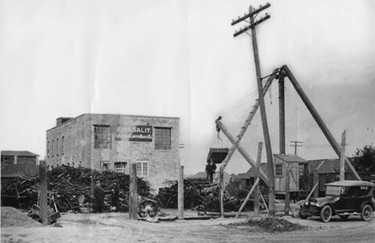
Through five generations, his family kept its connection to the city, where Cohen continues to live. Today, the company remains one of the largest industrial employers in Niagara Falls even as the economy has largely turned to tourism.
Article content
“It’s disheartening,” he said. “My family came here 120 years ago and have been honest, community-minded businesspeople, and now we’re being pushed out of Niagara for something that isn’t our fault.”
Canada needs steel
The average Canadian will almost certainly not include purchases of raw steel in their monthly budget, but it’s in a lot of things they use, from shopping carts and kitchen drawers to the machinery in hospitals, factories, bridges and buildings. Each year, Canada produces about as much steel as it consumes, which means it has the potential to be self-sufficient.
“We have the potential to become our own best customer for steel,” Prime Minister Mark Carney said earlier this summer.
But Canada sells a large amount of the steel it produces to the U.S. and relies on imported steel to satisfy many of its own needs, which has left the homegrown steel industry in a vulnerable position as the trade war with the U.S. drags on. That, in turn, is creating ripple effects through the economy.
There have been more than 1,000 layoffs in the industry since March, when U.S. President Donald Trump slapped 25 per cent tariffs on all foreign steel, including imports from Canada. In June, he elevated the levy to 50 per cent. Those tariffs, however, have mainly affected steel mills and plants that rely on the U.S. market for sales.
Article content
Cohen’s family company doesn’t sell much steel from Canada into the U.S. Instead, it buys steel from wherever it’s cheapest, whether that’s from a domestic mill or imported from a mill in another country. It then bends, shears and welds the steel into the shapes needed to build things. In some cases, his company installs the steel in buildings.
Article content
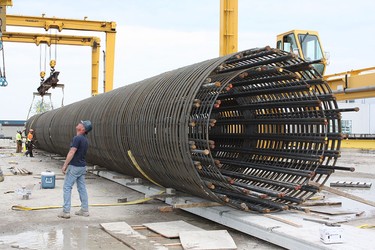
Salit Steel is far from Canada’s biggest steel company, but it has provided the metal for major projects around the country, such as the Gordie Howe Bridge that connects Windsor, Ont., to Detroit, landmarks including One Bloor, a 76-story skyscraper under construction in downtown Toronto, and significant infrastructure like the Keeyask hydroelectric dam in northern Manitoba, not to mention countless hospitals and other buildings and projects.
But Salit Steel hasn’t escaped the effects of the trade war entirely.
In March, Carney introduced counter tariffs on U.S. steel, which has historically been a big source for companies such as Salit Steel. He also drafted policies designed to limit the flow of steel from both free-trade and non-free-trade countries. Known as tariff rate quotas, they trigger 50 per cent tariffs on any imported steel that exceeds certain volumes.
Article content
The policies could play both ways for Salit Steel, which bids years in advance to supply metal for various projects and then must continually line up sources and deliver the steel as construction progresses.
Broadly speaking, the quotas are expected to raise steel prices inside Canada. Some even fear it will create shortages of certain types of steel because Canadian mills and plants do not make every type of steel.
Cohen said he had been carefully watching the political situation in the U.S. If Trump was elected, he wanted to know if tariffs would force him to deliver millions of dollars of steel at a price way below the market price.
As a result, he’d slowly been stockpiling steel. He’d always used part of the 20-acre property in Niagara Falls for this purpose and even leased an adjacent 12-acre industrial lot for more storage for a while.
“The secret to this game is all about when you buy,” Cohen said, “and I spend most of my time on the purchase, on buying at the right time.”
Steeler’s wheel
The seeds of Cohen’s noise problems were planted long before the U.S. trade war limited the flow of steel into Canada.
Sometime around 2002, developers applied to build a golf course on the wooded lot behind his steel plant. He isn’t a golfer, but he registered no objections to other people playing.
Article content
“If anything, maybe we get some free passes, maybe we cut a hole in the fence and we can go play golf,” he said. “I thought it was a positive.”
For years it was just a golf course. But by 2006, the city had received an application to turn it into a resort community, the Thundering Waters Village Residential Development, which required a zoning change so that a 10-storey condo tower with 150 units, 35 townhouses and 85 single-family houses could be built on the land surrounding the golf course. Nearby residents were apoplectic.
A petition objecting to the idea of taking down trees for houses circulated and was sent to the city, which still holds it and numerous other letters from nearby residents in its planning department’s files. Some letters cast the removal of the trees as a bad idea given global warming.
Many homeowners said they purchased their homes because the wooded lot was right next door. In a commonly expressed sentiment, one homeowner said, “I purchased my home … because I would never have rear neighbours.”
Of course, this was never guaranteed.
“When we moved into our house, the subject land was a railroad yard,” one homeowner said. “It could be quite noisy at night … This was OK because we knew about the yard prior to buying. There were no surprises.”
Article content
But there’s no law against cities rezoning land and building houses on vacant properties. Indeed, few if any of the letters sought to raise objections on any type of legal grounds.
Salit Steel, one company that might have raised an objection on legalistic grounds — that housing was an incompatible land use with its business — was oddly absent from the whole process.
The city said it would have sent a letter to affected property owners, but Cohen said he never received one, perhaps because a family holding company with a different name and address technically owns the land.
“The one thing to note is we’re an old company in Niagara Falls,” he said. “Some of the members of city council were customers and friends of ours. They never ever went to think about what impact this would have on us. They never called us to say you should pay attention to this.”
Mayor Jim Diodati, who was on the council at the time, also grew up in Niagara Falls and said he considers Cohen a friend. He even rode on Salit Steel’s cycling team to raise money for cancer research, but said he never raised the matter directly with Cohen.
“Were there errors made? Quite possibly,” he said. “I remember after the fact that Salit was saying they didn’t know about it.”
Article content

Even still, in January 2007, the Niagara Region Planning and Development wrote a letter to Niagara Falls’ planning department flagging potential conflicts between housing and industry.
“Ministry guidelines suggest public consultation should be undertaken with industries to make them aware … and to address potential concerns,” the letter said, adding that the facts did not appear to support residential development.
As part of the approval process, the housing developer hired an outside firm to conduct sound studies, including some on Salit Steel’s operations, which are located in an industrial zone amidst other industrial operations. In September 2008, the firm described Salit Steel as “noisy,” and concluded that a buffer of at least 70 metres would be needed. In the end, city council approved the housing development that way.
The housing developer, Mountainview Building Group, did not make anyone available for an interview.
It took a few years for the developers to build and sell the homes, and for people to move in, but eventually, the complaints started rolling in.
Cohen said regulators from the Ontario Ministry of the Environment showed up in 2016, and he wound up hiring his own sound consultant to conduct acoustical studies, which determined that a much larger buffer would be needed. Ultimately, they came up with a dozen ways that his business was violating the sound buffer requirements. One of the biggest was that storing and moving beams in the yard was too noisy.
Article content
“We could not come up with a solution, an economical solution,” he said. “Listen, you could build buildings or sound barriers around the steel we were storing, but they didn’t think even that would work.”
As a result, he started renting space in nearby Port Colbourne and also began a multimillion-dollar project to revamp an industrial property in Welland that could replace the Niagara Falls site.
Article content
The real cost of NIMBYs
Karen Chapple, director of the University of Toronto School of Cities, a think tank, said that putting two incompatible land uses together is a failure of planning.
“Ideally, when the city was doing the rezoning, there would have been consultations,” she said.
Mayor Diodati agrees: “In a perfect world, that’s exactly what should happen. There should be consultations.”
But he said municipal councils, in practice, often rely on community feedback when making a decision about a project. For that reason, businesses have to monitor what’s happening around them and how it affects their operations.
Industrial land … broadly is the low-hanging fruit for developers because it’s a way to avoid all those NIMBY folks
Karen Chapple, director of the University of Toronto School of Cities
Of course, councils relying on community feedback to guide their decision-making is also what makes NIMBY-ism so powerful — and controversial. Residents have an incentive to complain about projects going up near their homes that could create noise and traffic or simply ruin a view. That has the overall effect of pushing housing developers into less populated areas, such as industrial lots.
Article content
“It’s really hard to build infill in the residential lands,” Chapple said. “Industrial land … broadly is the low-hanging fruit for developers because it’s a way to avoid all those NIMBY folks.”
That dynamic has many other effects, including on nearby industrial operations. She said it generally makes more sense to build housing on empty lots in existing residential neighbourhoods since they already have sewers, school systems and other amenities.
By contrast, new houses built in less populated areas that lack that infrastructure may create extra costs for cities, which can ultimately increase the cost of housing.
There’s also a feedback loop: pushback against new housing construction means fewer houses are built, which can subsequently raise the overall cost of housing.
Separating heavy industry from residential areas makes obvious sense since it can otherwise create a case of “horrible economics, understandable politics,” said Victor Couture, an urban economist and professor at the University of Toronto’s Rotman School of Management.
“There’s a cost that the residents incur from being next to the industrial area, plus there’s costs from connecting these people to infrastructure,” he said.
Article content
But Couture said it’s a failure of planning that occurs in many places in North America. Ontario and the Greater Toronto Area have more than enough urban land to supply their housing needs, but people’s aversion to higher-density housing often makes it politically impossible to build in the most sensible places.
“At the end, we’re stuck with some kind of ethics of responsibility,” he said. “You have the people who moved in and you have workers in those plants who have jobs that are important for them, and it creates very difficult problems to balance everything.”
If Salit Steel was the only company running into noise problems, it might not add up to much more than a local story.
But Cohen moved to store steel at a new spot in Port Colborne and once again ran into complaints when local residents complained about the noise. The new spot wound up investing in a berm and then a higher wall that could act as a noise barrier, which has worked so far, but cost the property owners money.
Not too far away, Welded Tube of Canada Corp. — another of Canada’s largest steel companies — is facing a similar problem at a 112-acre plant in Welland, where it squelches and tempers steel.
Local residents began complaining about the noise several years ago, and chief executive Butch Mandel said he’s been dealing with provincial regulators ever since.
Article content
“It’s not like they came in and said, ‘You’ve got seven days to comply,’” he said. “But they ultimately said that the resolution to this is you’re going to have to shut down at certain times of the day and we could not afford to do that; it would be anathema.”
The plant needs to operate around the clock in order to be profitable, Mandel said. So far, he said he hasn’t cut any shifts, but only because he’s invested around $6 million in noise-mitigation measures.
“No additional business margin or revenue comes from doing that,” he said. “We’re in the steel business, the margins are strained a lot of the time, so it’s not like we’re swimming in great profitability.”
That $6 million could have been deployed on new machinery to make the plant more efficient somehow, or to build a new plant somewhere, Mandel said.
Article content
Victims of their city’s success
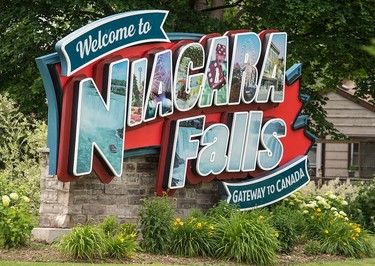
Niagara Falls Mayor Diodati said his city has its share of NIMBYs, but it’s accelerating.
“Now, some people, it seems, are BANANAs, which is, you ‘build absolutely nothing anywhere near anyone,’” he said.
The city is also evolving. In the 1990s, Diodati said its economy was “on its side.” Since then, new casinos have opened, and the regional wine sector has hit its stride while the number of craft breweries has exploded. Put it all together with the attraction of natural wonders from the falls to hiking trails, and the city’s tourism industry is thriving.
Article content
“The quality of life here is spectacular,” he said. “The trails, tender fruits, the beaches along Lake Erie.”
All that has created immense demand for housing in Niagara Falls, he said, adding that the province has allowed the city to expand its urban boundaries multiple times.
In the past, the city might have worked harder to retain companies such as Salit Steel because of the jobs they create. Diodati said his grandfather and uncles all walked to work at an industrial facility in the city. But over time, thanks to the advent of the automobile, retaining jobs within the community became less important as people could just commute to their workplace.
Cohen said the mayor acknowledged in private meetings that Salit Steel had been “screwed” by the decision to build housing nearby. Diodati remembers things differently.
“I don’t know about the word ‘screwed,’” he said. “I may have said Salit is a victim of the growth of the city.”
In any case, Salit hired lawyers and filed a lawsuit against the city in 2018, hoping to recoup some of the millions of dollars it was costing them to move out of the Niagara site.
Around the same time, Cohen attended a political fundraiser where Ontario Premier Doug Ford gave out his cellphone number and encouraged everyone in the room to call him.
Article content
Days later, he called Ford and within hours of leaving a voicemail, he said the premier called him back and listened to his story. They hung up after a half-hour and then several hours later, an official from the provincial environmental ministry called.
The premier’s office did not respond to a request for comment and a spokesperson for the Ministry of the Environment and Climate Change did not provide comment.
Conversations between Cohen and the environment ministry about how to address the situation progressed until January 2023, when the province amended Ontario Regulation 1/17 to set “consistent site-specific sound level limits for a certain area around Salit Steel’s Niagara Falls facility.”
Under the regulatory amendment, new sound limits give the company leeway to make noises within a 500-metre buffer zone.
“This change balances the operational requirements of industry with the need to build more homes in the province and better reflects the area’s current mix of industrial and residential land uses,” the province said in its decision.
The province estimated the changes saved Salit between $1.7 million and $10 million in costs.
It also means Cohen can tell local residents to pound sand every time they complain about the noise, but he said he grew up in the city, still lives there and has a reputation to consider, both his own and that of the company his great-grandfather started as a “penniless immigrant” more than a century ago.
Article content
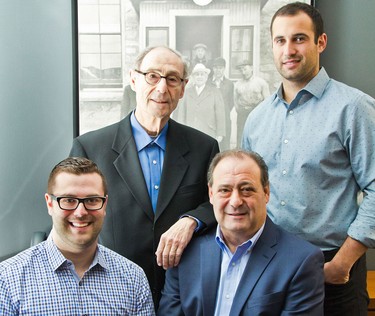
At first, his great-grandfather, Myer Salit, was collecting scrap metal from construction yards and selling it. Through five generations, his family has grown the company and Cohen fully expects two sons to take over after him.
Article content
Plus, Salit has already spent millions of dollars preparing its Welland plant to absorb some of the operations from Niagara Falls. The two plants have different labour unions and while the Niagara Falls property will continue to shear rebar, its other operations, including everything connected to its steel beams business, will be curtailed in the fall.
“Have you ever heard the expression, ‘You can’t fight city hall?’” he said.
But he isn’t walking away from this fight.
“My family is going to continue to eat,” Cohen said. “This hurts, but it won’t kill us. But there are innocent families that will lose their jobs as a result of this and we feel awful.”
• Email: gfriedman@postmedia.com
Article content
Industry and housing collide as Canada’s push to build
2025-09-08 10:00:01
