
Canada’s largest publicly traded engineering firms are seeking to downplay concerns that artificial intelligence might disrupt their business models, arguing AI will boost demand for their services.
Fears about AI’s impacts have weighed on valuations, with shares of WSP Global Inc. , AtkinsRealis Group Inc. and Stantec Inc. — all of which have large Unites States operations — respectively down 32 per cent, 13 per cent and 34 per cent over the past 12 months as of Monday.
Some investors have stepped back as revenue compression worries crept in. The concern is that AI-driven productivity may reduce billable hours for completing tasks and lead clients to push for lower pricing.
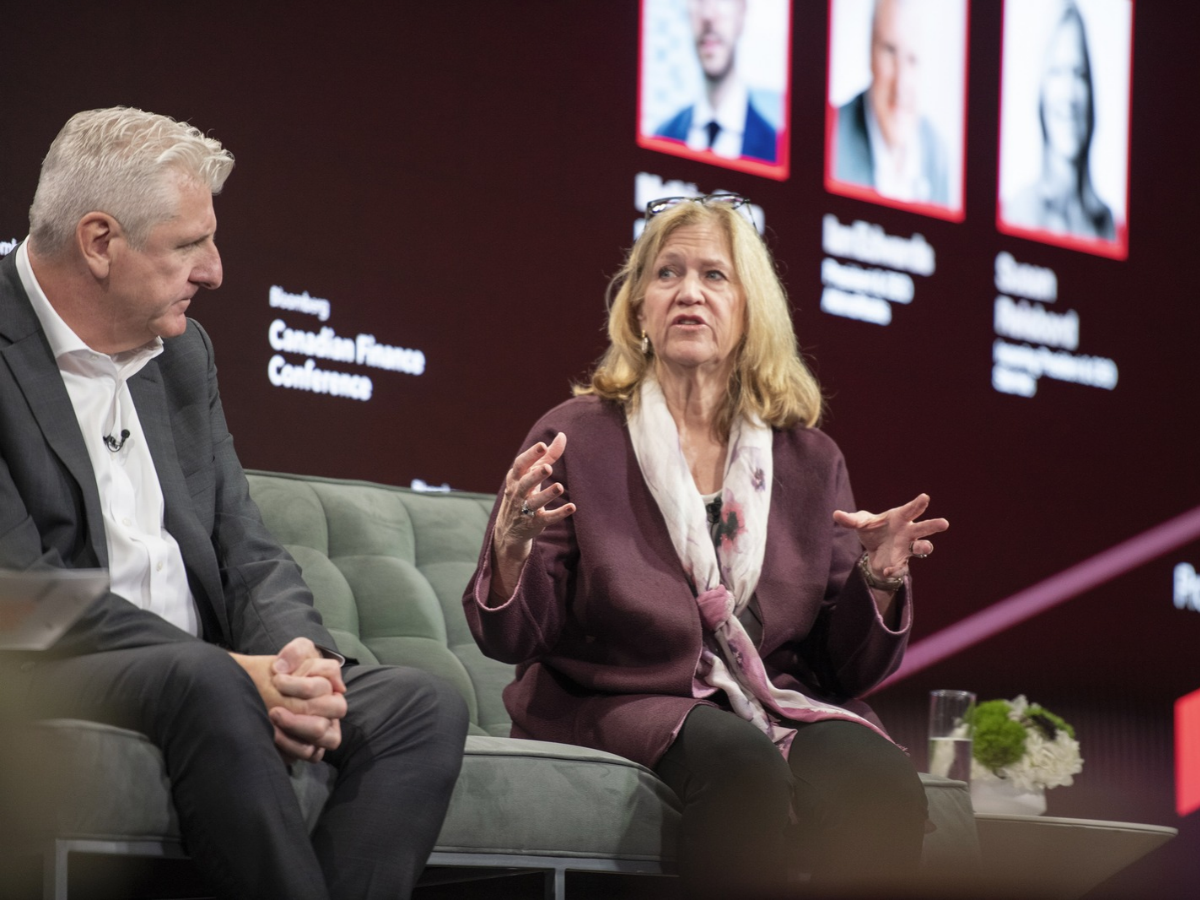
Incoming Stantec chief executive Susan Reisbord said Tuesday at the Bloomberg Canadian Finance Conference in New York that AI is a productivity tool like others it’s had for a long time.
“We can’t pull back a bridge or a road,” she said. “We have a big responsibility to be able to use it in the work that we provide by having the belts and suspenders to make sure that it’s a safe use.”
“So could the commercial model change a little bit? Yes,” she said, explaining that using AI tools has a cost too. “I don’t see the price going down by any stretch of the imagination of the total project price.”
AtkinsRealis chief executive Ian Edwards pinpointed the shortage of engineers. “So what AI is going to do is enable more capacity in the industry to deliver more desperate needs for power and infrastructure,” he said.

On the upside, engineering firms are also exposed to AI through the data centre buildout .
Stantec expects benefits for its infrastructure and nature-based solutions divisions, which can make projects “more acceptable” to communities when there’s some pushback, Reisbord said.
AtkinsRealis foresees a big boost for its nuclear business. It filed in June a notice of intent with the U.S. Nuclear Regulatory Commission to get certification of its Enhanced Candu 6 nuclear reactor, and has already spoken with U.S. utilities and hyperscalers.
Energy demand “is going to outstrip supply,” Edwards said. “It is a challenge, and we’ve got to find ways to build human capacity, to make ourselves more efficient, to use AI, to reduce the amount of people and make it more efficient.”
WSP, which acquired TRC Companies Inc. earlier this year, said during an investor presentation Monday that the U.S. is entering an electric infrastructure “supercycle,” supporting growth opportunities.
New technologies let its engineers navigate the more complex projects ahead and model options, the firm said. At the same time, demand for digital capabilities is increasing in bids.
“I look at the size of digital services that we need now to offer compared to where it was just five years ago,” WSP chief executive Alexandre L’Heureux said in the presentation. “I see a huge gap, or a big difference.”
Bloomberg.com
Canada’s top engineering firms fend off concerns over AI
2026-09-29 19:09:34