

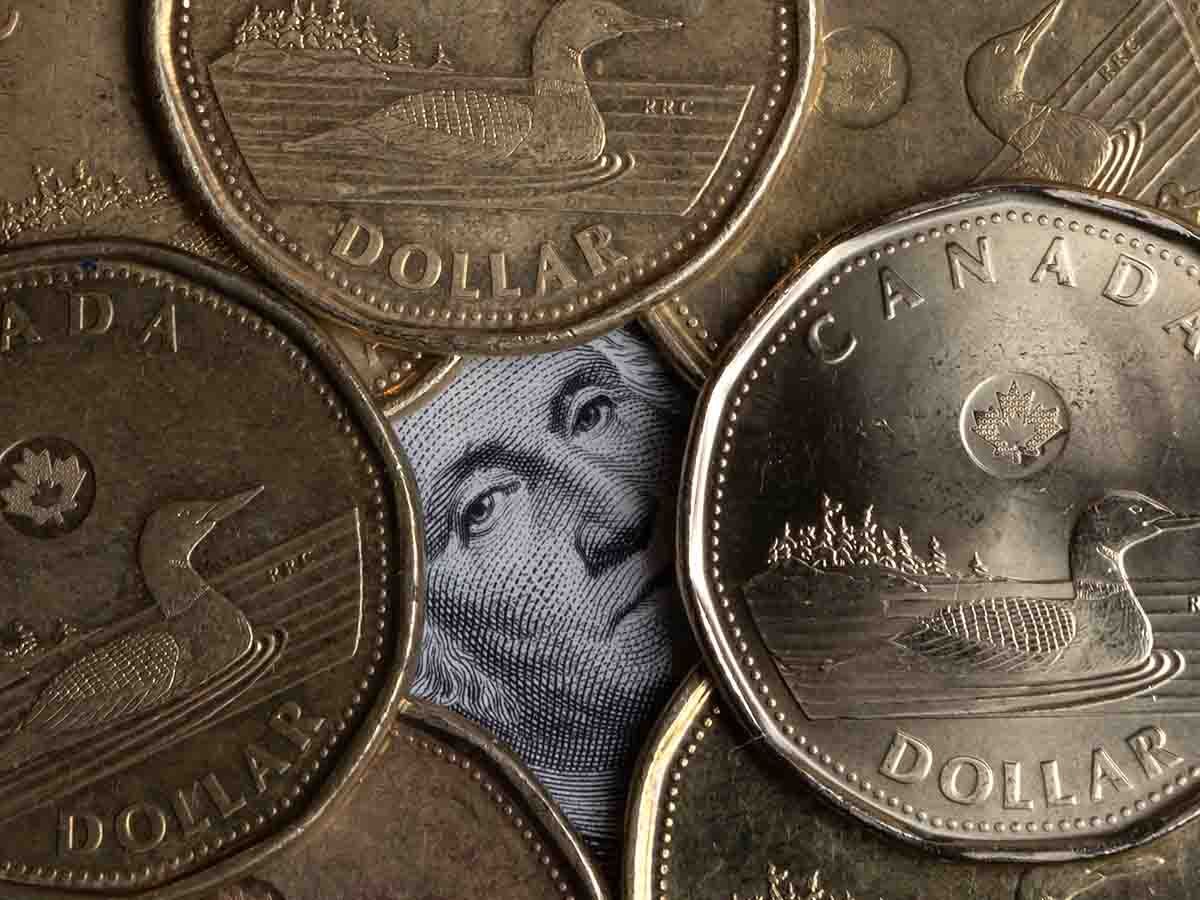
The
Canadian dollar
has yielded its petrocurrency status to the
United States dollar
due to the latest global energy crisis, says one currency analyst.
“The shale revolution turned the United States into the world’s largest oil and natural gas producer, meaning energy price swings now feed more directly into American trade balances, capital flows and Fed policy expectations,” Karl Schamotta,
chief market analyst at Corpay Currency Research, said in a note on Wednesday.
The change in relationship between the Canadian dollar and oil was on display Wednesday as it rose against its American counterpart while the price of oil fell.
Prices for
West Texas Intermediate
— the North American crude oil benchmark — were down 16 per cent early Wednesday afternoon on the temporary ceasefire announced between the U.S. and
Iran
.
“The Canadian dollar is climbing …
reflecting the fact that its long-standing role as a petrocurrency has eroded markedly in recent years,” Schamotta said.
The
loonie
rose 0.3 per cent to a bit more than 72 cents U.S. after falling as much as two per cent between the start of the war on Feb. 28 and the beginning of April.
“While a Gulf truce will weigh on oil prices, the (Canadian dollar’s) gearing to crude has been relatively weak in this episode,” Shaun Osborne, chief currency strategist at the Bank of Nova Scotia, said in a note.
Some of the Canadian dollar’s small rebound on Wednesday was a result of investors pulling out of the greenback after flocking to the safety of the currency during the worst of the crisis.
Schamotta also attributed the increase to a rise in “risk appetite” and an “improvement in borrowing costs” as the yields on bonds, which help set interest rates, dropped.
Between 2005 and 2015, the Canadian dollar moved in tandem with oil prices, which peaked as high as US$145 a barrel, leading to the currency breaking above US$1 on several occasions between late 2007 and 2013.
But the Canadian economy has changed.
“The breakdown (between the loonie and oil) reflects a structural transition in the Canadian economy as the debt and housing bubbles deflate, trade uncertainties weigh and prospects for renewed capital expenditure in the energy sector remain dim,” Schamotta said.
Reduced capital spending in the energy sector has directly hit the Canadian dollar, Charles St-Arnaud, chief economist at Servus Credit Union, said in a note on Wednesday.
He said the energy sector since 2015 has been returning a larger portion of revenues to shareholders, three-quarters of whom are not Canadians, while reinvestment in domestic operations has fallen. That has resulted in less money flowing into the domestic economy to be converted into Canadian dollars.
“As a result, the link between oil prices and the Canadian dollar has collapsed in recent years, with the correlation between the two being essentially zero,” he said.
The loonie was one of the weakest performers on Wednesday against the U.S. dollar among a group of 10 major currencies, rising 0.4 per cent while the Australian dollar rose 1.2 per cent and the Swedish krone jumped nearly two per cent as investors recalibrated their safe haven bets on the U.S. dollar, according to Bloomberg data.
Sarah Ying, head of FX strategy at CIBC Capital Markets, said in a note that the Canadian dollar could face more downside in the near term and fall to around 71 cents U.S. if fighting in the Middle East were to restart.
Sign up here to get Posthaste delivered straight to your inbox.

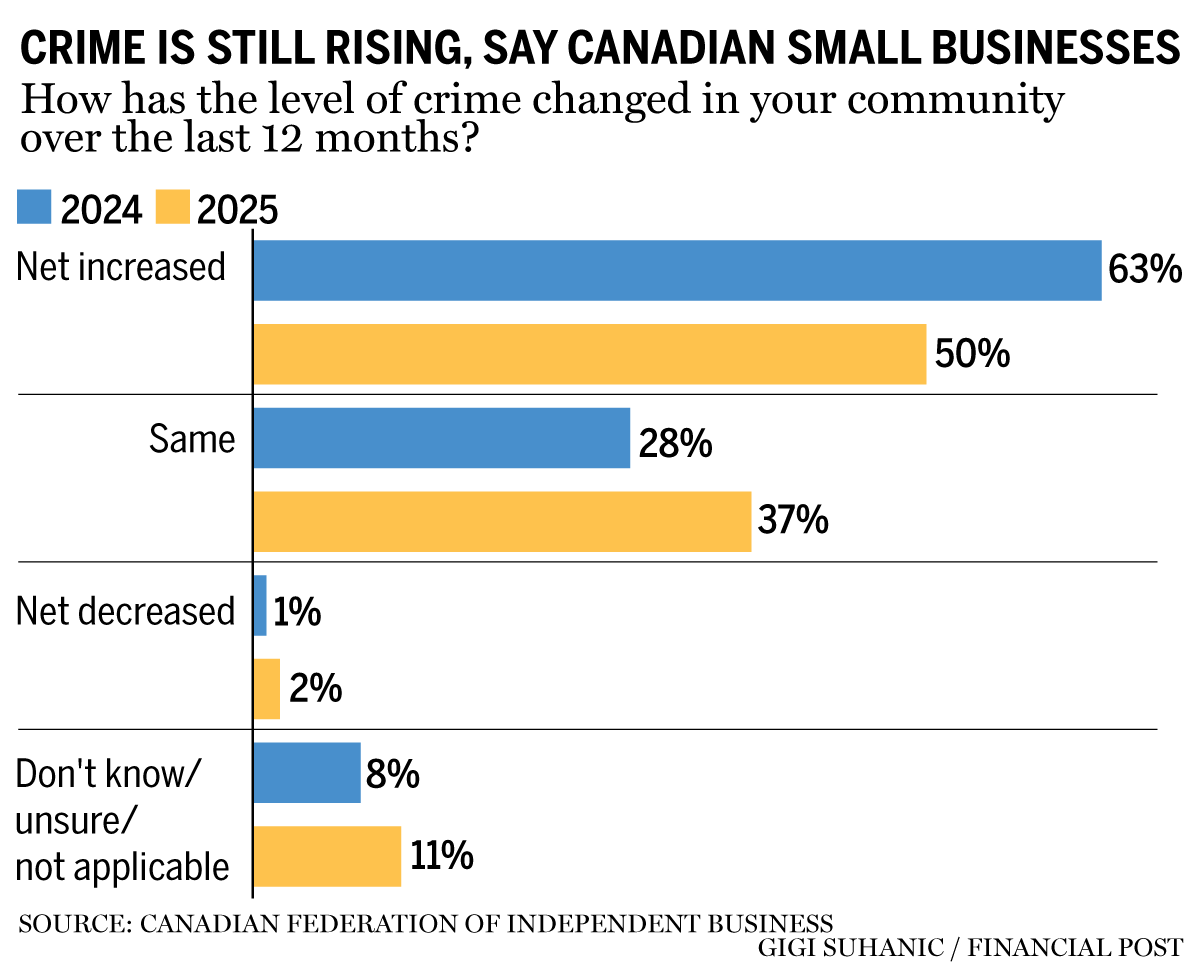
Many of Canada’s small businesses are witnessing an increase in crime as the cost of living climbs.
Only two per cent of small business owners say crime has declined in their community in the past year, compared to the 50 per cent who say it has increased, according to a new survey by the Canadian Federation of Independent Business (CFIB). — Ben Cousins, Financial Post
Read the full story here.

- Today’s data: U.S. personal income and spending, third update to fourth quarter GDP, core personal consumption expenditure index, initial and continuing jobless claims.
- Earnings: Richelieu Hardware Ltd., Roots Corp., BlackBerry Ltd., Cogeco Communications Inc., Reitmans Canada Ltd.



- Homeowners are tightening their belts as mortgage renewals approach, TD survey finds
- Air Canada to launch customer complaint pilot project as backlog grows
- Competition Bureau steps up probe of proposed Keyera gas acquisition

In the past month, two warnings concerning the use of artificial intelligence (AI) in the world of Canadian personal tax have been issued. The first, was a general warning to Canadian taxpayers courtesy of the Canada Revenue Agency, while the second was a reminder from a federal court judge about the use of AI by taxpayers when preparing their documents for court. Jamie Golombek explains more
here
about the dangers.

Interested in energy? The subscriber-only FP West: Energy Insider newsletter brings you exclusive reporting and in-depth analysis on one of the country’s most important sectors.
Sign up here.
McLister on mortgages
Want to learn more about mortgages? Mortgage strategist Robert McLister’s
Financial Post column
can help navigate the complex sector, from the latest trends to financing opportunities you won’t want to miss. Plus check his
mortgage rate page
for Canada’s lowest national mortgage rates, updated daily.
Financial Post on YouTube
Visit the Financial Post’s
YouTube channel
for interviews with Canada’s leading experts in business, economics, housing, the energy sector and more.
Today’s Posthaste was written by Gigi Suhanic with additional reporting from Financial Post staff and Bloomberg.
Have a story idea, pitch, embargoed report, or a suggestion for this newsletter? Email us at
posthaste@postmedia.com
.
Bookmark our website and support our journalism: Don’t miss the business news you need to know — add financialpost.com to your bookmarks and sign up for our newsletters here
Posthaste: How the U.S. dollar stole the Canadian dollar's petrocurrency thunder
2026-04-09 12:00:56