

The war in the Middle East has triggered what some say is the worst
oil and gas
supply disruption in history, not just by closure of the vital
Strait of Hormuz
, but also through damage to the region’s energy-producing infrastructure.
The repair bill will be massive, according to Norway-based researcher Rystad Energy, which estimates costs will run to US$25 billion and higher. Money, however, isn’t the biggest problem.
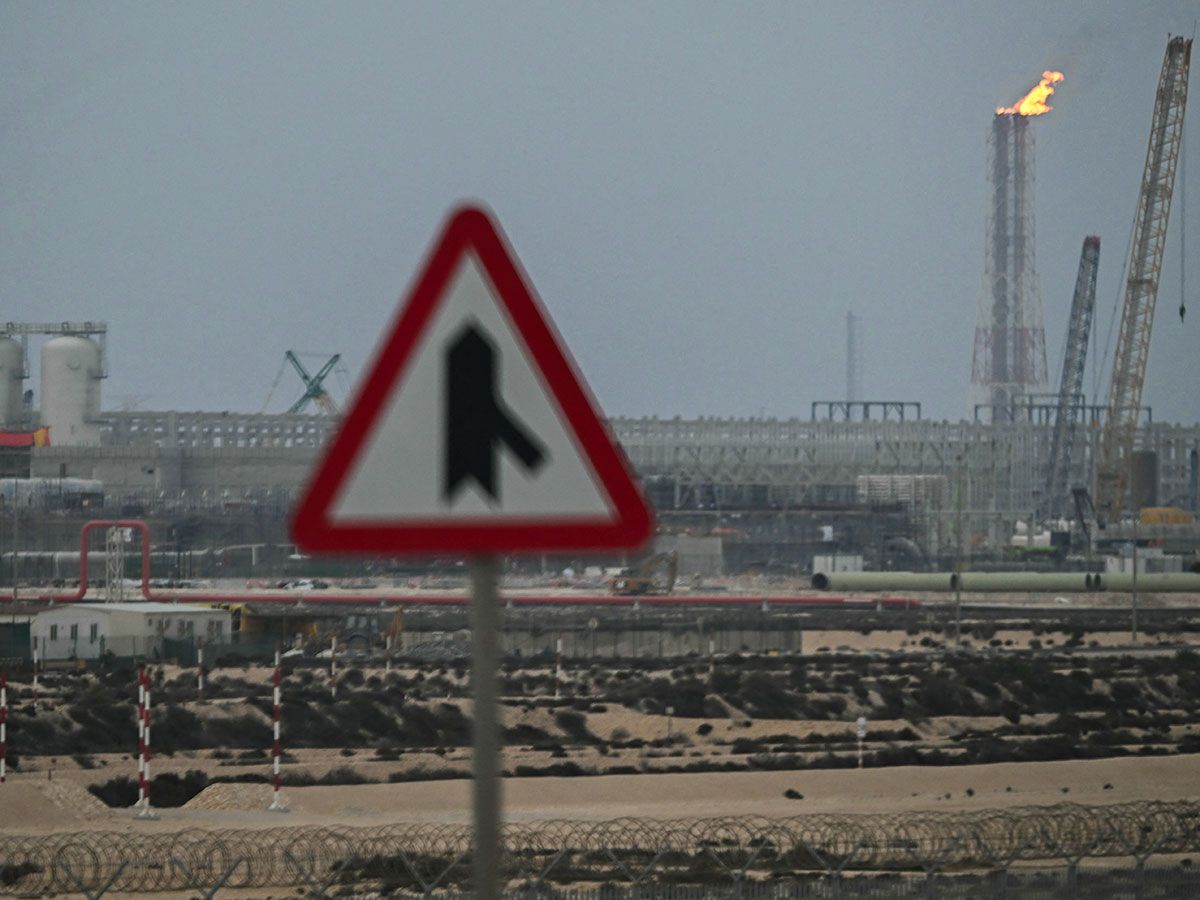
Take Qatar’s Ras Laffan Industrial City which supplies 20 per cent the world’s liquefied natural gas (LNG). Missile attacks destroyed the plant’s LNG “trains,” or liquefaction units, and cut capacity by 17 per cent, triggering a force majeure.
Rystad estimates it will take five years to get the facility back on its feet, not because the capital is lacking, but because there are only three global suppliers of the gas turbines used at the plant, all three of which entered 2026 with a production backlog of two to four years.
“The Gulf region’s recovery will be defined less by financial capital and more by structural constraints,” said Audun Martinsen, Rystad’s head of supply chain research.
“While some assets may be restored within months, others could remain offline for years. Beyond the status of the Strait of Hormuz, every day of damaged or shut-in infrastructure pushes pre-war production capacity further out of reach.”
In Bahrain, the Bapco Sitra Refinery was completing a $7-billion modernization program when attacks destroyed newly commissioned crude distillation units. Taking this block offline just months after production started will delay the revenue needed to support the investment, said Rystad.
To fix it international contractors will likely have to be hired at “conflict-inflated costs” and under war-risk insurance.
The speed of recovery in the UAE, Kuwait, Iraq and Saudi Arabia, which have suffered moderate to minor disruptions, will depend on their domestic engineering, procurement and construction (EPC) ecosystems — “an often-underestimated variable in conventional damage assessments,” said the researchers.
Saudi Arabia was able to rapidly restart its Ras Tanura refinery this month after debris fell within its perimeter because teams were already on site, but other regions might lack such backup.
The conflict, now in its fourth week, showed few signs of abating today as Washington and Tehran gave conflicting accounts over the status of talks, dimming hopes for a quick ceasefire.
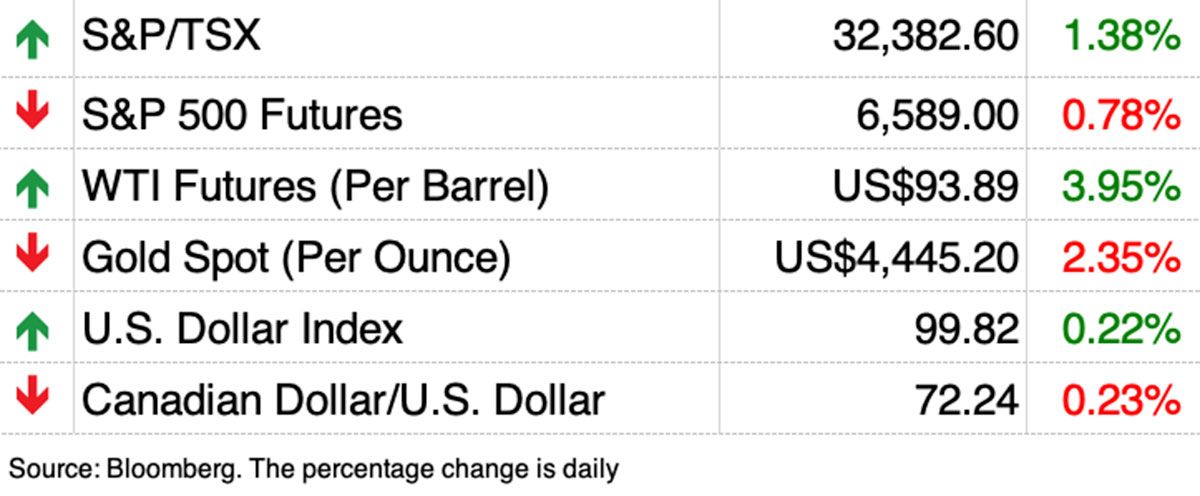
With attacks continuing across the region, Brent rose toward US$105 a barrel and West Texas Intermediate approached US$93, but higher prices could be on the horizon.
Rystad’s chief oil analyst Paola Rodriguez-Masiu said price increases have so far been muted because the pre-war surplus, crude-on-water and policy barrels have provided a temporary buffer.
“That phase is now ending,” he said in a report this morning.
“This is no longer a market that is tight for a couple of weeks, it is a market that will be fragile for longer.”
Sign up here to get Posthaste delivered straight to your inbox.


Canadians made more trips overseas in January than they did across the border by car to the United States — a first in records going back to 1972.
Travel to the U.S. by Canadians
was down 22 per cent from the year before, the 13th straight month of declines.
More Americans, however, made the trip north, marking the first month in which trips to Canada exceeded 2024 levels.
Shelly Kaushik, senior economist at BMO Capital Markets said higher gas prices from the Iran war will likely reduce traffic in both directions.
“Still, even if those prices recover, it looks unlikely that Canadian travel to the U.S. will normalize until the political and economic relationship truly thaws,” she wrote.

- Ontario government tables 2026 budget
- Bank of Canada senior deputy governor Carolyn Rogers speaks at the Brandon Chamber of Commerce
- Earnings: BRP Inc., Allied Gold Corp., Carnival Corp.


- Meet the Canadian e-bike maker who is redefining the factory floor
- Wealthsimple receives regulatory approval to offer prediction markets to investors
- Why market bets for interest rate hikes in Canada are so high

Many Canadian households have spent the past few years focused on shoring up their finances, but, despite their best efforts, global instability can quickly undermine their sense of security.
Although these situations can be unsettling, they are also a reminder that the strongest financial plans include room to adapt. Credit counsellor Mary Castillo explains some ways to incorporate flexibility into your current financial approach.
Read more

Interested in energy? The subscriber-only FP West: Energy Insider newsletter brings you exclusive reporting and in-depth analysis on one of the country’s most important sectors.
Sign up here.
McLister on mortgages
Want to learn more about mortgages? Mortgage strategist Robert McLister’s
Financial Post column
can help navigate the complex sector, from the latest trends to financing opportunities you won’t want to miss. Plus check his
mortgage rate page
for Canada’s lowest national mortgage rates, updated daily.
Financial Post on YouTube
Visit the Financial Post’s
YouTube channel
for interviews with Canada’s leading experts in business, economics, housing, the energy sector and more.
Today’s Posthaste was written by Pamela Heaven with additional reporting from Financial Post staff, The Canadian Press and Bloomberg.
Have a story idea, pitch, embargoed report, or a suggestion for this newsletter? Email us at
posthaste@postmedia.com
.
Bookmark our website and support our journalism: Don’t miss the business news you need to know — add financialpost.com to your bookmarks and sign up for our newsletters here
Posthaste: Middle East oil faces $25-billion repair bill — and that's not the really bad news
2026-03-26 12:04:02