https://www.youtube.com/watch?v=ruucQ2eplzI

It’s been a year full of surprises, from the roller coaster ride of
Donald Trump’s trade war
to the
AI boom
that drove markets to crazy heights in the second half.
As 2025 draws to a close, Douglas Porter, chief economist of BMO Capital Markets, looks back at some
“fun facts” about 2025.
Stocks’ unstoppable surge
Trump’s Liberation Day in April, which imposed
hefty tariffs
on countries around the world, brought markets to the brink of disaster. Major U.S. indexes shed nearly 20 per cent, the technical threshold for a bear market, until suddenly the momentum changed course.
Since then, the
S&P 500
has soared 35 per cent in one of the strongest six-month rallies since 1950.
Especially surprising was the performance of Canada and Mexico, the two countries initially hit the hardest by Trump’s penalties, said Porter. The
TSX beat
the S&P 500 despite recession fears and without the heft of the U.S. tech sector.
The surge in gold prices certainly helped, but even without bullion, the TSX still topped major U.S. averages, he said.
China keeps trading
China’s exports rose 5 per cent in 2025, and its trade surplus topped US$1 trillion despite being the prime target of Trump’s tariffs that at one point hit 100 per cent.
Exports to the United States dropped 19 per cent, but China made it up with sales to Europe and other Asian countries.
Currency stars
The
Canadian dollar
rose this year despite trade headwinds, but it had nothing on the euro which soared almost 14 per cent, its best year in more than two decades.
The outperformance came despite severe trade pressure from the United States, fiscal and economic concerns and the European Central Bank cutting rates more than the Federal Reserve, said Porter.
The Mexican peso gained almost as much, rebounding from a slump in 2024.
All that glitters
Gold has set
50 records this year, surging 70 per cent to a high of just below US$4,500 today. But it wasn’t the strongest commodity and not even the top precious metal, said Porter.
That title goes to silver whose 140 per cent rally this year put it to within a cent of US$70 today. Platinum — which has rallied about 124 per cent, is a close second.
Jobs, jobs, jobs
Predictions were dire at the start of the trade war about
job losses
as industries braced for the impact of punishing tariffs, but in the end, Canada’s job market exceeded expectations.
The
country gained thousands more jobs
in November than forecast, pushing the unemployment rate down to 6.5 per cent. It was the second monthly decline in a row in the jobless rate, which peaked at 7.1 per cent in September.
“Perhaps the most amazing stat for the year was that the number of Canadians unemployed was lower than at the start of the trade war a year ago,” said Porter.
Sign up here to get Posthaste delivered straight to your inbox.

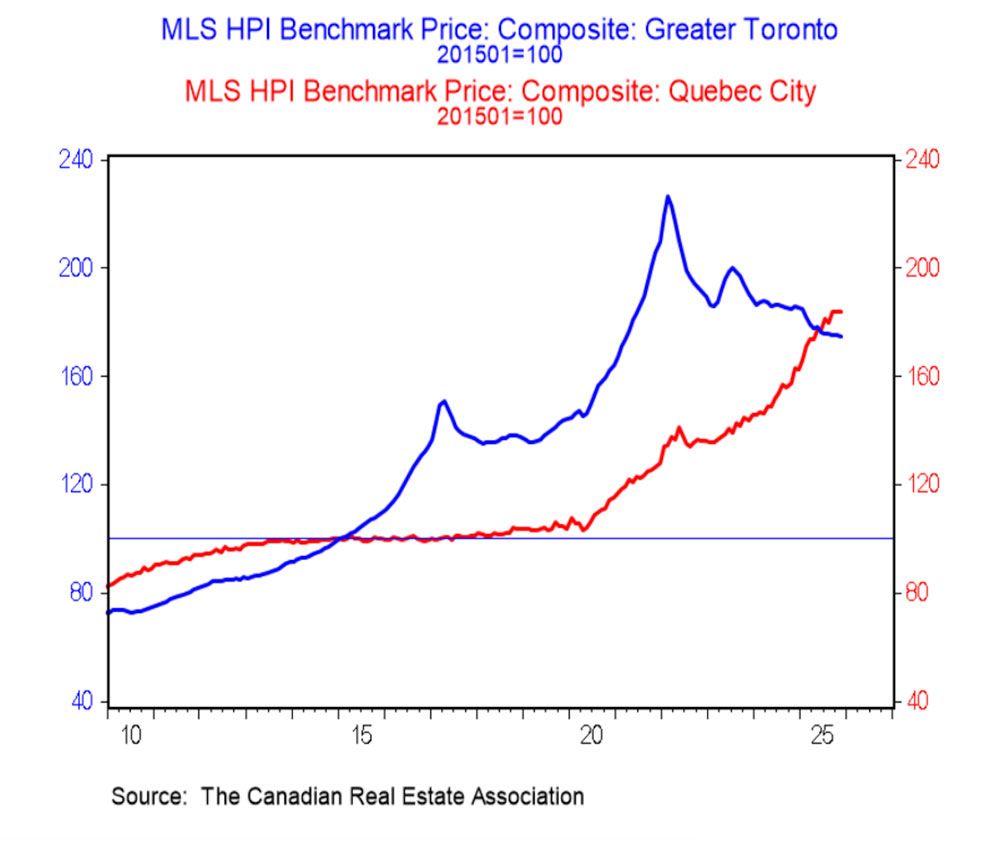
Quebec City’s real estate market is on fire, with benchmark prices up 13 per cent year over year in November.
The 84 per cent rise in prices since 2015 has now surpassed the 75 per cent increase in the Greater Toronto Area, said Sal Guatieri, senior economist at BMO Capital Markets.
Yet the cost of owning a home in the capital of La Belle Province is far more reasonable than in Ontario’ hub. Mortgage payments on a typical property, priced at $428,100, take up just one-fifth of the median family income.
The housing correction since the Toronto market peaked in early 2022 has improved affordability, but the mortgage service ratio is still about one half of family income, said Guatieri.

- The Bank of Canada will publish its summary of monetary policy deliberations from the Dec. 10 interest rate hold.
- Today’s Data: Canada’s gross domestic product for October, United States GDP for third quarter, industrial production, durable goods orders, Conference Board consumer confidence


- Why Tim Hodgson thinks energy is Canada’s ace card in a changing world order
- The investing winners and losers that made or crushed portfolios in 2025
- Why the Bank of Canada’s next move is more likely to be a hike

When dealing with debt problems, bankruptcy is often seen as an option of last resort. While it can provide a fresh financial start and be a viable option for some people, it is not a practical option for others. In fact, there are clear circumstances when going bankrupt will either be ineffective, impossible or detrimental for someone’s long-term goals. If you think you may need to declare bankruptcy,
here are some things to consider.

Interested in energy? The subscriber-only FP West: Energy Insider newsletter brings you exclusive reporting and in-depth analysis on one of the country’s most important sectors.
Sign up here.
McLister on mortgages
Want to learn more about mortgages? Mortgage strategist Robert McLister’s
Financial Post column
can help navigate the complex sector, from the latest trends to financing opportunities you won’t want to miss. Plus check his
mortgage rate page
for Canada’s lowest national mortgage rates, updated daily.
Financial Post on YouTube
Visit the Financial Post’s
YouTube channel
for interviews with Canada’s leading experts in business, economics, housing, the energy sector and more.
Today’s Posthaste was written by Pamela Heaven with additional reporting from Financial Post staff, The Canadian Press and Bloomberg.
Have a story idea, pitch, embargoed report, or a suggestion for this newsletter? Email us at
posthaste@postmedia.com
.
Bookmark our website and support our journalism: Don’t miss the business news you need to know — add financialpost.com to your bookmarks and sign up for our newsletters here
Posthaste: The precious metal that beat even gold's gains and four other surprising stats of 2025
2025-12-23 13:00:41