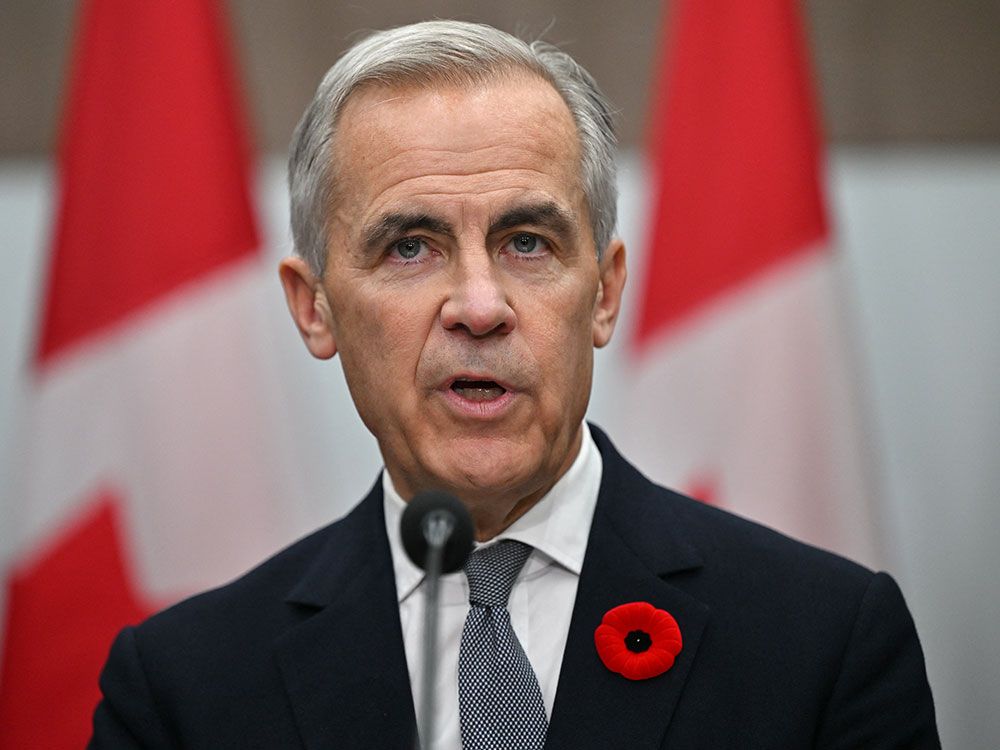

Prime Minister
Mark Carney’s first budget
is promising a suite of tax measures to help incentivize capital investment in Canada’s economy as the country remains mired in a trade war with its largest trading partner.
The government’s fiscal approach includes a target of reaching $500 billion in new private sector investments over the next five years.
Tuesday’s budget commits to several tax measures including immediate expensing for manufacturing or processing buildings that are acquired on or after Budget Day and used for manufacturing and processing before 2030. This means a 100 per cent first-year write-off of expenses.
The measure was an ask from the manufacturing sector and is in line with the incentives in U.S. President
Donald Trump’s
“One Big Beautiful Bill Act” passed in the summer, which provided 100 per cent expensing of qualifying manufacturing structures that are in service before 2031.
The budget also reinstates the accelerated investment incentive, which provides an enhanced first-year write-off for most capital investments, and promises to bring back a tax incentive that previously expired at the end of 2024, called the accelerated capital cost allowances (CCA) for
liquified natural gas (LNG)
equipment and buildings.
However, the CCA now has a new criterion, where the incentive will only apply to low-carbon LNG facilities. LNG facilities in the top 25 per cent of emissions performance will be eligible for CCAs of 30 per cent for equipment and 10 per cent for non-residential buildings.
Facilities in the top 10 per cent of emissions performance will be entitled to CCAs of 50 per cent for liquefaction equipment and 10 per cent for non-residential buildings. This measure will apply only to property acquired on or after Budget Day and before 2035. Tuesday’s budget did not provide details on what those emissions requirements would be but promised to provide details at a further date.
Notably, the
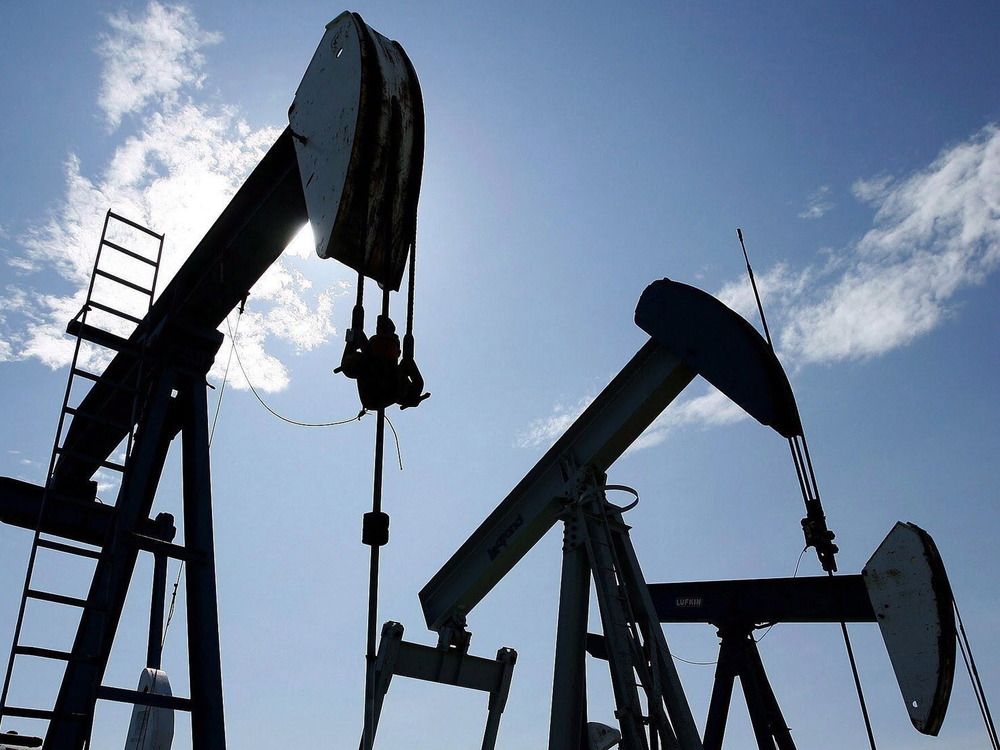
oil and gas emissions cap
remains in place, but the budget left the door open for its potential removal.
“Effective carbon markets, enhanced oil and gas methane regulations, and the deployment at scale of technologies such as carbon capture and storage would create the circumstances whereby the oil and gas emissions cap would no longer be required as it would have marginal value in reducing emissions,” the budget document said.
The government will also move forward with previously announced tax measures, including immediate expensing for clean energy generation and energy conservation equipment, zero-emission vehicles, patents, data network infrastructure, computers and capital expenditures for scientific research and experimental development.
These tax measures, which are dubbed the “Productivity Super Deduction” will cost an average of $2.7 billion annually and the government projects they could generate up to $9 billion in economic output annually over the next nine years.
The budget also says Canada now has a corporate tax advantage over its international counterparts. Thanks to the new tax measures, Canada’s marginal effective tax rate (METR) has dropped by more than two percentage points from 15.6 per cent to 13.2 per cent. This rate puts Canada the lowest in the G7 and is below the OECD average of 17.7 per cent and that of the U.S. at 17.6 per cent.
“With the productivity super deduction, Canada’s METRs are competitive with those in the U.S. across most sectors, particularly in manufacturing and processing,” the budget said.
The federal government will also increase the expenditure limit for the Scientific Research and Experimental Development (SR&ED) tax incentive, from $4.5 million to $6 million to further encourage business investment in research and development.
The growth agenda still comes at a cost to Ottawa’s balance sheet. Carney’s government is projecting a federal deficit of $78.3 billion for the 2025-2026 fiscal year; this is more than $36 billion more than what was forecasted in the 2024 Fall Economic Statement. The deficit is projected to fall to $56.6 billion by 2030.
The federal budget is promising $89.7 billion in net new spending over the next five years, with $33.5 billion falling under capital investment. Taking into account spending measures announced between the 2024 Fall Economic Statement and the budget, total net new spending since the last fiscal update stands at $125.6 billion by 2030.
Federal debt charges are expected to grow over the next five years, growing from $53.4 billion in 2024-2025 to $76.1 billion by 2030. The federal debt, minus financial and non-financial assets, is projected to hit $1.347 trillion in 2025-2026 and grow to $1.591 trillion by the end of the decade.
The Carney government also promises to find $60 billion in operational savings over the next five years through its comprehensive expenditure review. This will be achieved through right-sizing programs and finding efficiencies in the federal government. The budget promises workforce adjustment and attrition of public servants, to return the size of the federal workforce to “sustainable levels.”
Tuesday’s budget also announced its immigration levels plan for 2026-2028, which will stabilize the permanent resident admission targets at 380,000 per year over the next three years, down from 395,000 in 2025.
The government is also increasing the share of economic migrants from 59 per cent to 64 per cent. The plan will also reduce the temporary resident admissions targets from 673,650 in 2025 to 385,000 in 2026 and 370,000 in 2027 and 2028.
Last month, Carney teased a talent-attraction program, with the budget promising up $1.7 billion for recruitment programs.
Big picture investment items over the next five years include $115 billion in infrastructure spending and $110 billion for productivity and competitiveness.
• Email: jgowling@postmedia.com
Canada budget 2025 offers billions in tax incentives to spur investment in economy
2025-11-04 21:28:49