

Canadian travellers have been giving the United States the cold shoulder since President
Donald Trump
ramped up
tariffs and sovereignty attacks
— but they are not the only ones.
The latest travel data shows that international arrivals to the U.S. dropped across the board as trade tensions and stricter border policies spurred international travellers to cancel or postpone trips, said Ksenia Bushmeneva, an economist with Toronto Dominion Bank,
in a report out yesterday
.
“Negative sentiment among potential travellers has risen, prompting boycotts and broader hesitancy to visit the U.S.,” she said.
Overseas arrivals to the United States dropped about 12 per cent in March from last year, with the states most popular with overseas visitors — New York, Florida, California, Nevada and Texas — suffering the most, she said.
Air arrivals from the Caribbean and Central America led the decline by percentage, followed by Mexico, Western Europe and Canada.
Travellers from Western Europe, which account for about 18 per cent of international visitors to the U.S. and are the main source for New York State, were down by 190,000 visitors.
America’s nearest neighbours Canada and Mexico represent 50 per cent of international traffic and both saw steep declines in March, said Bushmeneva.
Airport arrivals from Canada, the largest source of international travellers to the U.S., were down 13.5 per cent (about 112,000 visitors) and return trips by car declined even more, falling 32 per cent or 700,000. The drop-off will hit Florida, New York, Washington, California and Michigan the hardest.
Nor is it looking like the summer travel season will turn this trend.
“Future flight bookings from Canada have collapsed, declining by 70 per cent for every month through September,” said Bushmeneva. Hotel bookings have fallen 7.8 per cent from a year ago, and are down 13 per cent in New York City.
Travel and tourism
is a multi-trillion-dollar industry in the United States, the biggest in the world, and the slowdown in foreign visitors will weigh not only on this sector but also on the whole economy. Last year international visitors spent $286 billion in the U.S. — which equals about what Americans spent buying used cars, said Bushmeneva.
New data from the World Travel & Tourism Council (WTTC), shared exclusively with Bloomberg, projects that the U.S. is on track to lose US$12.5 billion in travel revenue this year. Of the 184 economies analyzed by WTTC, America is the only country set to lose tourism dollars.
“Other countries are really rolling out the welcome mat, and it feels like the U.S. is putting up a ‘we are closed’ sign at their doorway,” said WTTC chief executive Julia Simpson.
Tourism makes up about 3 per cent of U.S. gross domestic product, and employs 20 million people.
“As a labour-intensive sector, it is a powerful engine for job creation — last year alone, leisure and hospitality accounted for 16 per cent of all private sector new jobs,” said Bushmeneva.
While foreign travellers are important, domestic tourism is the real money-maker, accounting for about 75 per cent of spending in the U.S. Now it too is showing signs of strain. Fewer Americans plan to travel this year, including within their own country, as volatile stock markets, economic uncertainty and the threat of rising inflation undermine confidence, the latest data shows.
Sign up here to get Posthaste delivered straight to your inbox.

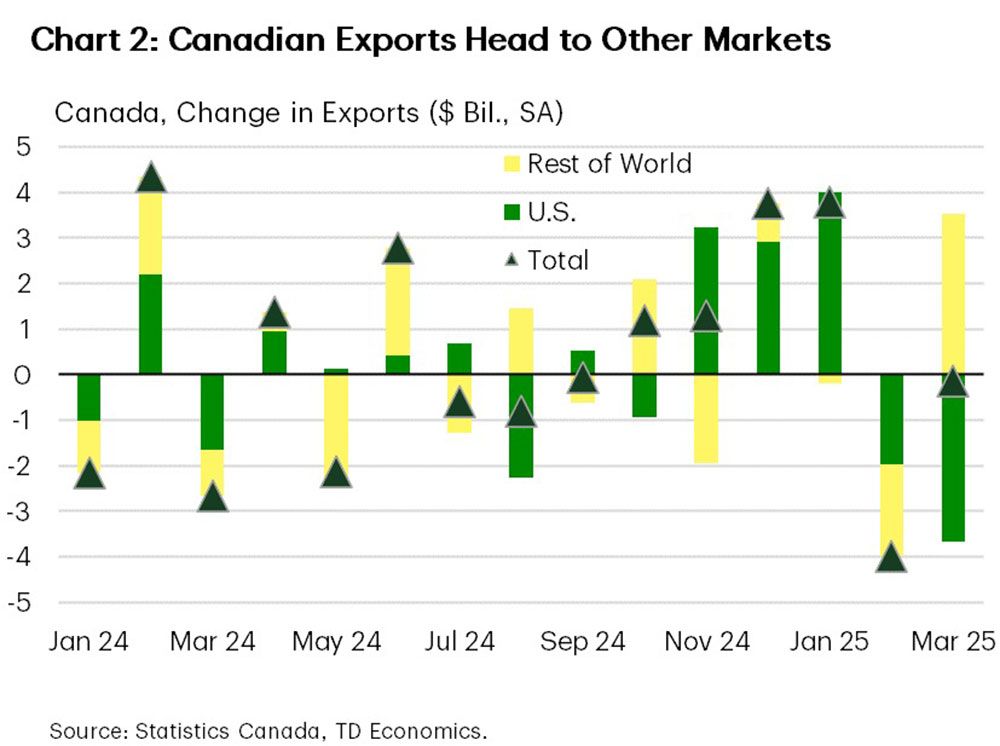
Finally some good news on Canada’s trade. March data may have shown a steep decline in exports to the United States, but it was offset by a rise in shipments to the rest of the world, as
today’s chart from Toronto Dominion bank shows
.
Another bright side, about 50 per cent of Canadian goods heading to the U.S. were compliant with the Canada-United-States-Mexico Agreement (CUSMA) in March, up from the average of 38 per cent in 2024. That means more goods are dodging Donald Trump’s tariffs.
“Nonetheless, as long as the uncertainty about the trade relationship persists, firms are understandably cautious. With the malaise hanging over the economy it’s unlikely things will turn a corner soon,” wrote Andrew Hencic, TD senior economist.

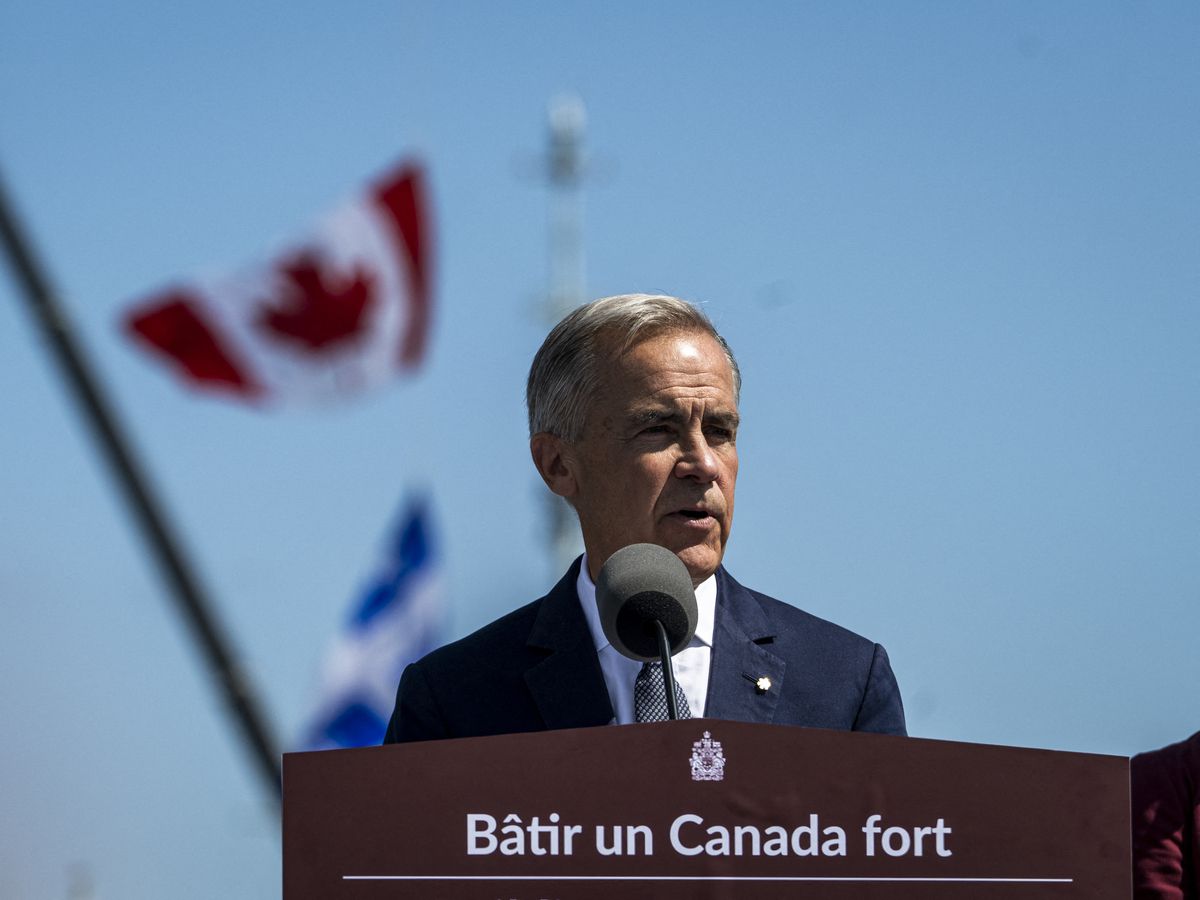
- Prime Minister Mark Carney reveals his new cabinet. Members will be sworn in at a ceremony in Ottawa this morning.
- Today’s Data: United States inflation, NFIB small business optimism
- Earnings: Power Corp of Canada, CAE Inc., Endeavour Silver Corp.


- Canada’s unicorn problem: New study explores why our best startups fail to take flight
- Ask yourself as an investor: What would Buffett do?
- Donald Trump seeks bromance and billions as he heads to Gulf

Married couple Gerard, 56, and Penelope, 54, want to leave the grind of corporate Canada sooner rather than later — but only if their investments are able to generate the $90,000 a year they believe will allow them to live the retirement they want. Is retiring in four years, or even better in two to three years, possible?
Find out what Family Finance says.
McLister on mortgages
Want to learn more about mortgages? Mortgage strategist Robert McLister’s
Financial Post column
can help navigate the complex sector, from the latest trends to financing opportunities you won’t want to miss. Plus check his
mortgage rate page
for Canada’s lowest national mortgage rates, updated daily.
Financial Post on YouTube
Visit the Financial Post’s
YouTube channel
for interviews with Canada’s leading experts in business, economics, housing, the energy sector and more.
Today’s Posthaste was written by Pamela Heaven with additional reporting from Financial Post staff, The Canadian Press and Bloomberg.
Have a story idea, pitch, embargoed report, or a suggestion for this newsletter? Email us at
posthaste@postmedia.com
.
Bookmark our website and support our journalism: Don’t miss the business news you need to know — add financialpost.com to your bookmarks and sign up for our newsletters here
Posthaste: Canadians aren't the only tourists shunning America as foreign visits plummet
2025-05-13 12:12:06