
https://www.youtube.com/watch?v=ZNPaTp7ny8Q
Trade and market access ultimately are still based on people and the relationships they build. There is always more than one way to get a deal done, but in a world where trade is increasingly being weaponized, every successful deal begins with personal connection — no matter who is sitting across the table.
While a face-to-face relationship never guarantees a deal, there is almost always a guarantee of no deal without one. In today’s trade environment — marked by rising protectionism and geopolitical tensions that can disrupt markets overnight — effective economic leadership means being pragmatic, not ideological.
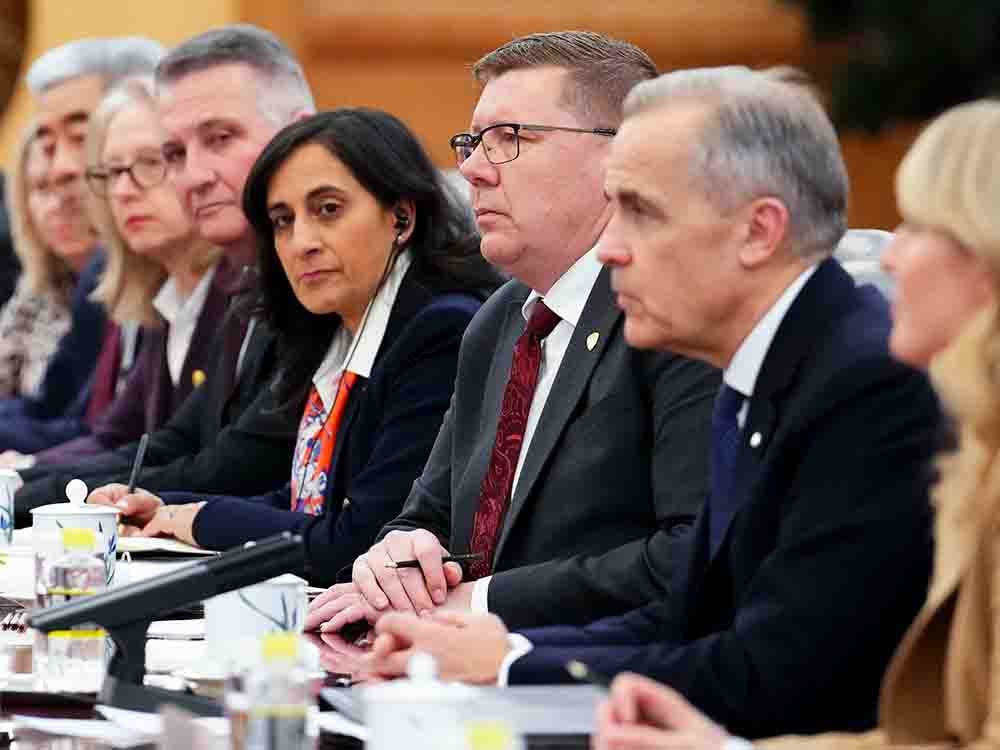
That was true when Parliamentary Secretary Kody Blois and I travelled to
China
in September 2025. For
Saskatchewan
, this was a continuation of our international relationship-building but also intentional engagement with the federal government. For Canada, this demonstrated to Chinese officials a renewed united approach — an approach that was essential to securing the trade agreement announced last week. In just months, Canada engaged more substantively with China than it had in years — and the results show what determined leadership, and showing up, can deliver for our producers, industries and our
Canadian economy
.
The reduction of Chinese
tariffs
on Canadian
canola
, pulses and seafood reopens one of Canada’s most important export markets. For Saskatchewan, which produces more than half of Canada’s canola crop, access to a $4-billion canola seed market is essential. The Canola Council of Canada estimates the sector generates $44 billion annually and supports over 200,000 jobs nationwide.
China remains one of the world’s largest economies and largest importers and a critical market for Canadian exports. For Canadians who have lived through uncertainty and disruption, predictability matters, market access matters and so does demonstrating to our global partners that Canada is reliable.
Some Canadians may question engaging with a country like China given differences in government systems and human rights concerns. Our country’s economic success depends on international trade, and if Canada only traded with nations we completely align with politically, we would have a pretty short list of customers. Given that China is one of the largest markets in the world, we are far better off working to maintain a positive trade relationship with them than isolating ourselves. As
Prime Minister Mark Carney
recently said in
Davos
: “If you’re not at the table, you’re on the menu.” Strategic engagement is not endorsement — it is pragmatic leadership.
Trade agreements are tools for economic progress, not symbolic gestures, and their value is measured by the jobs they create or protect, the incomes they sustain and the investment they attract. That is the business case, one that Canadians understand very well. They also understand that meaningful progress rarely gets done without sitting down with someone. Whether it’s at the farm table or in a boardroom — respectful relationships matter — and they were central to getting a deal done to reduce these Chinese tariffs.
Relationships are why Saskatchewan continues to invest in international trade and investment offices around the world. At home, this commitment to relationship building led to the creation of the Ministry of Trade and Export Development and to ongoing support for the Saskatchewan Trade and Export Partnership (STEP), a government-industry non-profit that connects local businesses with global opportunities.
It is often said that Saskatchewan was punching above its weight on the world stage. Today, we are recognized for what Saskatchewan people have always known: we have what the world needs — food, fuel and fertilizer — with a modern, high-tech labour force that brings our products to global markets. Still, we cannot do it alone — no Canadian province can. A unified Canadian approach to strategic international partnerships is key to securing the quality of life and opportunity that Canadians expect and are proud of.
Saskatchewan is one of Canada’s most trade-dependent provinces, exporting roughly 70 per cent of what we produce. Our economy is built on agriculture, energy, mined minerals, advanced manufacturing, and forestry — sectors that succeed only when global markets are open, predictable and rules-based.
It is imperative to understand that having physical access to global markets — making sure our products can reach the customers who drive growth and wealth in our province and across Canada — is as important as market access itself.
Saskatchewan’s agriculture producers, miners, manufacturers and energy producers compete in global markets every day. From oil, potash and uranium to canola, pulses and value-added products, what we produce here feeds, fuels and powers the world. They succeed because they are prepared, innovative and resilient — but also because governments work to open doors and maintain stable trade relationships.
The Canada-China agreement underscores the importance of federal and provincial governments working together with industry. When governments align around our strengths, Canada is better positioned to succeed internationally.
Diversification remains core to Saskatchewan’s economic strategy. No single country — including China — should ever be Canada’s only customer. But walking away from major markets is not a strategy either. Responsible leadership means managing relationships carefully, protecting our interests and ensuring producers can compete with fair access to customers around the world.
Global trade is not without risk. It is precisely why engagement matters more, not less. Saskatchewan’s approach is straightforward: build relationships, diversify markets and support a broader Canadian role in global trade. Economic strength comes from showing up, not stepping back.
Saskatchewan is a special place, defined by the steady grounded nature of its people and the way we support one another. That same spirit underpins our success internationally. As we look ahead, Canadians have every opportunity to succeed in an increasingly uncertain global trade environment — as long as we continue to lead with relationships, resilience and a commitment to being at the table.
Scott Moe: For Canada's economy, pragmatic engagement with China beats isolationism
2026-01-26 16:53:23